Photobucket
Showing posts with label Maharashtrian Recipes. Show all posts
●๋•∂нαηαѕняєє●๋•


I have been blogging less these days and i am sorry for that. Blogging really takes much time and these days due to alma mater, am not able to get time for blog. Well, I will definately look to it that i take time off for blogging henceforth. I had clicked and cooked plenty of new recipes and want to post them but unfortunately I failed to do so.
Today am posting a sabzi recipe. I wanted to post some recipes which really takes less time and doesn't require too many ingredients. So I thought of posting this sabzi. Well, most of us love spring onion due to its unique taste and blending with other ingredients. Spring onion is one such vegetable with is easy in cooking compared to other vegetables. It gives a extra kick to the food and hence is found in most fast foods these days. It can be used in salads, pancakes and salsas and so on.
As the name suggests, these leafy vegetables comes only during seasons. They look very much like green onions except that they have bulb which are longer and defined. The bulbs and leaves both are used for cooking. Spring onions can be used for decorations, salads, stir fried and whatever way you wish to use them.
Always pick fresh spring onions from market since they tend to spoil fast if stored. Always select those spring onions which have crispier leaves and has rich green colour in them with hard bulb. Never pick those which are slim, wilted and discoloured or else you will end up wasting your money. Discard and peel  the outer layer of the spring onion , that will give you a richer crisp taste. 
In case, you have a big garden at your residence better plant them since they grow faster and you will get to taste organic spring onions. My grandmother has them in her garden at our native place and it really tastes much better than those available at the markets.
Coming to the recipe, this one can be called a typical maharashtrian recipe and it goes well with dal chawal and chapatis.


Ingredients:
Spring onions - 2 bunches
Mustard seeds - 1/2 teaspoon
Turmeric powder - 1/4 teaspoon
Red chilly powder - 1 teaspoon
Asafoetida - 1 pinch
Salt - to taste
oil - 1 teaspoon


Method:
  1.  Pick fresh spring onions with crisp leaves since they are much taster and healthy.
  2. Wash them nicely under tap water and let them dry for few minutes.
  3. Peel the outer layer of the spring onion . This is would give you good crispness to the food as the outer layer tends to wilted and tasteless due to over exposure to the environment.
  4. Chop them into 1 inch pieces . Chop the bulbs in a way that you get in ring shapes as it them look nice especially to the childrens.
  5. Keep a kadai over flame and add oil in it. Let the oil to heat for a minute.
  6. Once the oil gets hot, add Asafoetida and  Mustard seeds. Let the seeds crackle.
  7. Now add the chopped spring onions and saute them for a minute. Don't add water. Spring onions have natural moisture in them and let the vegetable to cook in its own water content so that becomes tastier and healthier.
  8. Add the turmeric powder and chilly powder and saute for a minute.
  9. Add salt as per taste and saute it well. 
  10. Keep sating for some 7-8 minutes.
  11. Once the vegetable is cooked well, it will be tender soft and will be transparent .
  12. Remove and serve hot with chapatis or dal chawal.

Preparation time: 15 minutes.
Cooking time: 10 miutes.
Serves : 4 -6 persons.
Shelflife: Best fresh.
Serving suggestion: Serve hot with Chapati or Dal chawal.


Note:
  • To pick good quality spring onion , always check the leaves. The one with crisp leaves are best.
  • Also pick those spring onions which are bit green. ( Not necessary that it should be fully green, a part of it should be greener). Those are healthier as per nutritional value.
  • Always peel off and discard the outer layer of the Spring onion, since they are not much crisp and tend to spoil the other parts which cooking.

Click here to learn and know more about Maharashtrian foods and cuisines- An Introduction To Maharashtrian Cuisine.


sign
●๋•∂нαηαѕняєє●๋•
I haven't posted something which can be cooked on daily basis since a long time. These days, i really find it difficult to get time for blogging, but still i make it a resolution this year to post and experiment as many dishes as possible.

Life really turns hectic and fast as days go. We hardly find time for ourselves and activities. Am no exception to this rule, my days are really going hectic and fast with days. That's the reason i opt for something which can be cooked within minutes though i love experimenting in the kitchen. But who has the time? I am south indian and rice is basic staple food at my home. Though i like rice, i believe that rice isn't that good for health and body as much as other grains do. But my parents are aged and can't opt for chewy foods like chapathi and rotis at this age and neither do I have enough time to cook multiple cuisines a day. And the rising prices of grocery won't permit me to take that easy on cooking.

I have always been a fitness freak. I believe in eating right and working out right and staying fit. I make this mandatory in my daily routine and also i regularly keep a check on the fitness of my family members. And the good health starts with good and healthy food so I always make it sure that i cover my daily menu with not only good and tasty food but also healthy and nutritious food. So green veggies, other vegetables, less oil and other things are always taken note of whenever i get into kitchen. I love eating veggies more than rice or roti. It not only provide much needed nutrients but only energizes the body.


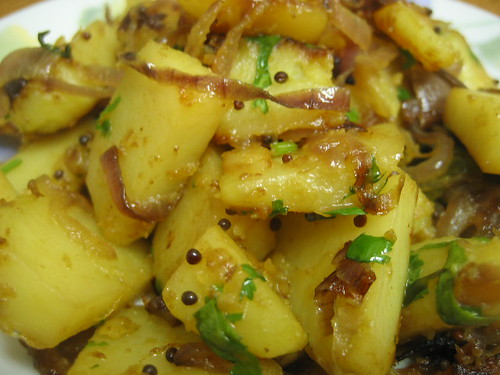
This recipe which can be categorized under sabzi is one of my fav dish. I simply love this and make it a point to prepare this at least once a week. This sabzi is not only delicious and spicy but also is good for health. This has maximum veggies like potatoes, cauliflower, peas and carrots which are good for health. As you all know,potatoes have a special power to fulfill the hunger and the other veggies carrots, peas and cauliflower are full of nutrients and health benefits and so does potatoes. To add spicy taste red chilly powder and garam masala are used . This sabzi can be served with rice and as well as roti, bhakri and chapatis. This can also be eaten alone if you area veggie lover, even i do the same.

Ingredients:
Potatoes - 2 big potatoes chopped in 1 inch cubes
Cauliflower - 1 cup florets (cut them into medium or small florets as per choice)
Carrot - 1 big carrot chopped into small pieces
Peas - 1/2 cup (fresh or frozen peas tastes best then the dried ones)
Red chilly powder - 1 tablespoon
Garam Masala powder - 1 tablespoon
Turmeric powder - 1/2 teaspoon
Asafoetida - 1 pinch
Mustard seeds - 1 teaspoon
Onion - 1 small onion (finely chopped)
Curry leaves - 10-12 nos
Oil - 1 tablespoon
Salt - As per taste
Coriander Leaves - Freshly chopped 1 tablespoon for garnishing.


Method:
  1. Wash and chop the vegetables and keep aside. Keep the potatoes cubes in water since potatoes tend to change color once they are chopped.
  2. Take a deep bottomed vessel or a big kadai. Heat it.
  3. Add oil and allow to heat. Add mustard seeds and allow them to crackle.
  4. When the mustard seeds crackle, add the asafoetida and chopped onions and saute till the onion turns golden brown in color. (Here is a handy tip, sprinkle a pinch of salt when you the saute the onions..this will make it saute faster and your time would be saved).
  5. Add the curry leaves and just saute for few seconds on low flame. Dont saute curry leaves for long since it looses it important nutrients if sauted for long or fried.
  6. Add 2 cups of water this thadka and allow it to boil. This will take just 2-3 mins as the kadai is already heated.
  7. Add the chopped vegetables to the boiling water and salt and stir well.
  8. If you want to cook this in a typical Maharashtrian style, then just add 1/2 cup of water and the chopped vegetables . Add the salt and close the lid. Salt helps the moisture the retain and helps the vegetables to cook well in its own water. This saves the nutrients. Maharashtrian style of cooking basically involves less amount of water and believes in cooking veggies in its own water.
  9. Close the lid and allow the vegetables to cook.
  10. When the vegetables tender soft and cooked well, add the turmeric powder, red chilly powder and garam masala to it. Stir well so the masala gets coated well. Lower the flame and stir in between till the sabzi gets dried up. This takes just 3 mins and also the masalas penetrates well in the veggies.
  11. Garnish with freshly chopped coriander leaves.
  12. Serve hot with rice or roti.


Preparation Time: 40 minutes
Cooking time: 20 minutes
Serves: 4 persons
Shelflife: 1 day
Serving suggestions: Serve hot with rice or roti.


Note:
  • If you are in hurry, chop the vegetables a day before and store in a air-tight container or zip-lock packet and keep it in refriegerator a day before, this will save your time and also save the nutrients.
  • Adding a pinch of salt helps the onions to saute fast.
  • To cook this in Maharashtrian style, just add less amount of water and add salt before allowing them to cook. This helps the vegetables to cook well and helps the vegetables to cook in its own water which gives a different unique taste to the cuisine.
  • Don't keep stirring often, this would mash down the vegetables. Beginners can use non-stick kadai to avoid any mess.


Click here to learn and know more about Maharashtrian recipes and cuisines - An Introduction To Maharashtrian Recipes and Cuisines.


sign
●๋•∂нαηαѕняєє●๋•
A Modak is a sweet dumpling very popular in western and southern India. Modak has a special importance in the worship of the Hindu Elephant god, Ganesha. In India, Modak is considered to be the favourite food of God Ganesha, hence it is a age long ritual of making modak and offering them on the auspicious day of Ganesh Chaturthi. It is ritual of offering 11 or 21 modaks to the God Ganesha as "Naivedya".
Ganesh Chaturthi is celebrated all over India, but it is celebrated with much enthuthiasm in Maharashtra where idols of Ganesha is brought home and the house and mandap( place where the idol is sitted) is decorated and people are invited to pray and take prasadhams. In Public places too large idols as long as 10 ft is sitted which is open to everyone irrespective of religion. The visarjan usually lasts as per people's preference . Some bid goodbye in 1 and half day, some for 5 days and some worship till the Ananth Chaturthi which falls on the 11th day after Ganesh chaturthi. During this period, the festival is celebrated with much enthuthiasm and happiness. And Modak is offered to the god and the people visiting him.
There are different kinds of Modak, but Ukadiche modak called as "Rice Modak" is considered the favourite of the God Ganesh. Hence, Ukadiche Modak is a must among many hindus on the first day "Ganesh Chaturthi".
Apart from Ukadiche Modak, there are different kinds of modak like Meva modak, Kaju Modak, Ghavan (which is prepared in konkan belt), Mango Modak etc. This Ukadiche Modak is a steamed rice modak, but there are some modaks which can be deep fried too. But do check the calories. Most of them prefer steamed modak, since it tastes declicious.
A Modak is called Modak in Marathi in Maharashtra, Modhaka in Kannada (karnataka), Modhakam in Tamil(in TamilNadu) and Kolukattai in Telugu (in Andhra Pradesh). The sweet filling is made of fresh coconut and jaggery the shell is of rice floor. The dumpling can be fried or steamed. But is would like to suggest you to go for steamed modaks, they are really delicious. Modaks can be prepared with the help of our hands, where the dough which is made from rice is shaped into cups and the puran is stuffed inside and the edges are closed like a potli. Or even a modak maker can be used which are easily available in stores. Use the modak makers which is a small mould which is used to shape the modaks. Just fill this mould with dough, with a hole in centre of it where the stuffing would be kept and then seal it from the bottom with dough. I have used modak moulds for making the modaks, since i love the shapes which it gives them. So here is the recipe for ukadiche modak, a favourite of Ganesha and kids.


Indregients:
For the dough (outer covering):
Rice or Rice Flour (Tandul Pithi) – 2 big bowls (heaped)...Read the method below for making the rice flour, or else rice flour available in market can be used.
Salt (meeth) – 1/4 tspn
Water – 2 big bowls
Clarified ghee – 2-3 tbsps.


For the stuffing (puran):
Grated Coconut (Khislela Naral/Nariyal khisa) – 2 big bowls
Jaggery crushed (Gul) – 1 1/2 big bowls
Cardamom powder ( Velchi) – 1 tspn.


Method:
For the dough:
  1. Clean, wash and drain rice thoroughly.
  2. Dry completely by spreading on an absorbent sheet of cloth. Use a clean Cotton towel for absorbing.
  3. Grind dried to a fine powder. Pass it through a fine sieve. Seive it twice to get fine flour.
  4. Bring one and a quarter cups of water to boil in a pan, add salt and ghee to it.
  5. Turn off the flame and add the rice flour in a flow, stirring continuously to prevent lumps from forming.
  6. Remove the pan from heat and keep it covered for ten to fifteen minutes. Place a wet cloth over it to prevent it from drying.
  7. Grease your palms with a little oil and knead the cooked rice mixture to a soft dough. Knead to make a soft dough with a smooth finish which will give a shiny look.
  8. Keep covered with a moist cloth. The pic below shows how the dough would look like when is how the dough would look like when kneeded.

For the stuffing:
  1. Take grated coconut and jaggery together in a bowl and mix it well.
  2. After combing them well, place a pan on heat and cook on medium heat for one or two minutes or till light golden brown.
  3. Keep stirring them . After 10-15 min jaggery will start melting. Then add cardamom powder and stir well.
  4. The mixture will start changing colour and become sticky; this means your mixture is ready.
  5. Ensure that it is not overcooked. Remove it from flame and cool it slightly.
  6. This is how the stuffing also called puran would look like when it is cooked. See the pic below.
For Making The Modaks:
  1. Divide the coconut mixture into ten to twelve equal sized portions.
  2. Divide the dough into ten to twelve lemon sized balls.
  3. Now, take 2 -3 drops of oil and greese the palms well so that the modak can be made easily without any stickiness at hands.
  4. With greased palms flatten each ball to form discs of three inches diameter.
  5. Place a portion of coconut and jaggery mixture in the centre, form eight to ten pleats with fingers, gather them together to form a bundle and seal the edges at the top.
  6. Or try to make bowls and place the stuffing, use the way you feel most convenient. For bowl method, try to make small bowl like shapewith the dough.
  7. The sides of the bowl should be very thin and then make as many pleats as you can.
  8. Place some stuffing into it and start gathering the pleats together in the centre.
  9. Or for one more easiest method, opt for modak moulds which is available in stores. Just stuff some dough into the mould and with the help of fingers create some space for the stuffing the middle (the mould has a hole at the bottom, place the fingers into it to shape them like a mould within). The outer cover should be thin, so use greased fingers and press with the walls of the moulds and stuff the purans into it. Cover the bottom with some dough and remove it from the mould. Usually the edges of mould is joined with nails, where one is kept open to remove the modaks from the mould.
  10. The below pic is just taken before it was removed from mould and was about to be steamed. You can the notice that this modak are not shiny, but the steamed modaks come out shiny and looks beautiful.
The Steames Modaks:
  1. Now steam modaks you made in a pressure cooker(1/4th full water) without the whistle on. Or use a idli cooker too.
  2. Just use a strainer with flat base which fits on your cooker and keep a fine cloth to place the modaks.
  3. Steam them for 10-12 minutes.
  4. It will look shiny when it is steamed. Look the pic below for the steamed modak. The edges too looks smooth when steamed.
  5. Serve modak when hot with ghee, but dont forget to offer it first to God Ganesha.


Preparation Time: 1 hour
Cooking Time: 20 -30 minutes
Serves: 4 persons, makes about 12 -16 modaks
Shelflife: 1 day
Serving Suggestion:Serve Hot with ghee or without ghee as per choice.


Note:
  • Apply oil or ghee before kneading and also while making modak.
  • You can use idli steamer for steaming the modak. Before placing them in cooker for steaming deep them in water, as they wont crack.
  • Make sure you keep the prepared modaks (before steaming) moist by using wet cloth to cover them else they will dry.
  • In the pressure cooker you can use a banana leaf instead of cloth. Even turmeric leaf can be used, it gives a good aroma to modaks.


Click here to know more about Indian Sweets and Desserts - An Introduction To Indian Sweets .

Click Here to know more about Maharashtrain food and cuisines- An Introduction To Maharashtrian Foods and Cuisines.


Click here to know more about Tamil Nadu Foods and Cuisines - An Introduction To Tamil Nadu Foods and Cuisines.

sign
●๋•∂нαηαѕняєє●๋•

Methi Pakora , one more greens to my list of recipes in the blog. But this one is a snack, unlike the others which were side dishes or main course. Methi (Fenugreek leaves) is a full of medicinal properties. Methi has good benefits for diabetic patients, nursing mothers and for those who want to reduce cholestrol. This is a wonder herb popular in India, rich in protein, calcium, phosperous and iron in its natural form. Its mineral and vitamin content is also very high and is easily assimilated by our body. The fibre content in Methi is effective in stabilizing blood sugar levels by just having 1/2 cup of methi leaves daily or a spoon of methi seeds with milk taken an hour before meals. Methi is cooked in various form in India be it main course, side dish or a quick to eat snack. Methi pakoras are one such snacks, and it is a good source of food. Methi pakora is simple to prepare and easy to digest. I hope this recipe would be liked and enjoyed.


Ingredients:
1 cup chopped methi leaves (Fenugreek leaves)
2 chopped onions
1 teaspoon Turmeric powder
1/2 teaspoon Red chilli powder
2 cups Besan (Gram flour)
1 teaspoon Amchur powder (Dry Mango powder)
Salt to taste
3 cups oil for frying.


Method:
  1. Add water to besan and make thick batter. Add the water in small amounts to avoid forming of lumps.
  2. Add chopped methi leaves, chopped onions,turmeric powder, red chili powder, and mango powder and salt to the besan batter and make a mixture.
  3. Heat the oil.
  4. Fry small portions of this mixture in oil till they turn brown. You can take the portions with the help of your hands or with spoon.
  5. Serve hot with green chutney.


Preparation Time: 10 minutes.
Cooking Time: 20 minutes.
Serves: 4 persons.
Shelflife: Best fresh.
Serving suggestion: Serve hot with green chutney.


Note:
  • Add water in small amount to avoid forming of lumps.
  • The amount of red chilli powder can be adjusted as per taste.


Click here to know more about Punjabi Foods and Cuisines - An Introduction To Punjabi Foods And Cuisines.
●๋•∂нαηαѕняєє●๋•
Chikki is candy loved by indians all over. A universally popular snack form the western part of India, but made in a similar manner all over the country and even abroad. Chikkis are popular in Maharahtra, konkan region , gujrat and tamilnadu. but the method too remains same all everywhere.


Ingredients:
Groundnuts – one and half cup
Sugar or jaggery – about one cup
Ghee – 2 teaspoons.


Method:
  1. Roast the groundnuts in a kadai on a medium flame.After it cools, rub off the skin and crush lightly with hand .
  2. Grease a plate with ghee and set aside .
  3. Melt the sugar in a thick bottomed kadai over a very low flame.
  4. When it has melted and turned slightly golden, remove from the flame and add the nuts while stirring briskly.
  5. If you are using jaggery follow this method. Heat jaggery (or sugar) in water to create a thick syrup. Test by adding one drop in cold water. If the jaggery remains firm, then consistency is correct.
  6. Add roasted peanuts, and immediately spread on the greased board.
  7. Roll out flat to 1 cm thickness, and allow to cool.
  8. Cut into squares when cool.Store in an airtight box.

Making time: 35 minutes

Serves: 4 persons

Shelflife: 2-3 weeks if stored in airtight container.

Note: Though sugar or jaggery , any one of them can be used to prepare chikki, I would recommend to use jaggery. Jaggery gives chikki a good taste and also keeps it little soft making it easier to chew and eat. Also jaggery is better than sugar in terms of nutrition and health, since it contains iron and also doesnt add up more calories.


Click here to know more about Gujrati foods and cuisines- An Introduction To gujrati cuisines and Recipes.

Click here to know more about Maharashtrian Recipes and cuisines- Introduction To Maharashtrain Recipes.

Click here to know all about Tamil Nadu cuisines- Introduction To Tamil Nadu Cuisines And Recipes.

Click here to know more about of Indian Sweets and Desserts- An Introduction To Indian Sweets And Desserts.

●๋•∂нαηαѕняєє●๋•
Chapatis or phulkas is the daily bread for millions of Indians. No meal is complete without them and yet many find them difficult to make.These are called so because they swell up with steam while being cooked.They are cooked first on a dry hot tava, then held directly over a flame where they "phulao" ("swell" in Hindi) with steam to the point of bursting. Indian households knead the dough fresh for every meal and the Roti is almost invariably served freshly rolled and baked. Some prefer to puff up the Roti over the fire after it is cooked on the griddle and some like to keep it flat. Some variations of Rotis are Parathas (Indian Fry Bread), Puris (Indian Deep Fried Bread), Naan (Nan) and Kulchas. Basically there are 7 types of rotis or Indian breads namely roti, chapati, naan, poori , Bhatura, Paratha and Kulcha.


Ingredients:
2 cups Wheat Flour
1 tsp Ghee
1 tsp Salt
Water to knead dough (take luke warm water half the ratio of flour i.e., in ratio of 2:1)
Extra dough for rolling the Chapatis.


Method:
  1. In a mixing bowl, take the flour and add 1 tbsp oil. Rub the flour between your palms so that the oil in incorporated the dough.
  2. Add salt to it. Now add water, a little at a time and knead the flour to make a stiff dough .
  3. For best results, cover the dough with cheese cloth and leave it for 30 minutes.
  4. Now take a small portion of the dough and roll it into a smooth ball between your palms.
  5. Flatten the ball of dough by pressing it in a seperate bowl of whole wheat flour.
  6. Dust the flat dough liberally on both sides with the flour.
  7. Place the dough on a flat surface and with a rolling pin roll out a 6 inch flat Roti.
  8. Use circular movements of the rolling pin to get a perfect circle which is evenly thick all over.
  9. The Roti should be as thin as a slice of cheese .
  10. If the dough gets stuck to the rolling pin while rolling, dust it with more flour.
  11. Now heat a Tava or a flat Griddle, reduce the heat to medium and flip the rolled out Roti on the griddle.
  12. Cook it on one side for about 10-15 seconds and flip it over before you start to see big brown spots (undercooked).
  13. Cook on the other side for another 15-20 seconds or until you see brown spots to indicate the Roti is cooked on this side.
  14. Keep turning the Roti on the griddle so that it does not stick.
  15. Finally, flip the Roti again on the fist side and finish cooking for another 5-10 seconds.
  16. Alternatively, you can remove the Roti from the griddle and place the first side (undercooked) on a direct flame for 5-10 seconds to puff the Roti.
  17. Remove when the Roti is puffed and cooked.
  18. Serve Rotis hot with any hot Indian vegetable or Curry. You can brush the Roti with a little hot Ghee or Oil for an authentic taste.


Making Time: 25 minutes
Serves: makes 8 chapatis approximately.
Shelflife: 1 day.


Note: To get really soft chapatis, the trick lies in the kneading. Use fresh yoghurt or milk instead of water! When you're done kneading the dough and it is smooth, wet your hand with water and run it all over the surface of the ball of dough. Cover with a damp cloth and set aside for half an hour before using.


Click here to know more about Maharashtrian Recipes and cuisines- Introduction To Maharashtrain Recipes.

Click here to know more about Indian Breads - Introduction To Indian Breads.

●๋•∂нαηαѕняєє●๋•


Ingredients:
Channa Dal - 2tbsps.
Urad Dal - 2tbsps.
Tur dal - 2tbsps.
Masoor Dal - 4tbsps.
Salt - to taste.
Turmeric Powder - 1/4tsp.
Goda Masala - 1tsp.
Red chilli powder - 1tsp.
Coriander leaves (chopped) - 2tbsps.

For Tempering:
Ghee - 2tbsps.
Cummin Seeds - 1/2tsp.
Mustard seeds - 1/2tsp.
Garlic - 8-9 cloves.
Whole Dry Red chillies - 3 nos.


Method:


  1. Pick and wash all the dals with plenty of water. Then soak in for 25 mins . Drain and leave aside.
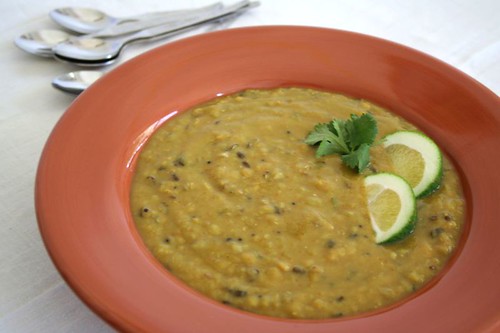
  2. Peel garlic and chop finely.
  3. Boil the dals in water along with turmeric powder and until almost cooked.
  4. Add red chilli powder, goda masala and salt. Mix well.
  5. Boil for another few minutes to cook the dal properly. Take off from the heat.
  6. Heat the ghee in a pan, add cummin seeds and mustard seeds. Cook for a moment.

  7. Add chopped garlic and whole dry red chillies and saute until garlic turns brown.
  8. Add this to the cooked dal and keep covered for 2-3 minutes.
  9. Stir the dal well, garnish with coriander leaves.
  10. Serve hot.


Making Time: 30 minutes (excluding the soaking time).

Serves: 3 persons.

Shelflife: 1 day.

Serving suggestions: Steamed rice, chapati.


Note: This dal tastes best with steamed rice. For goda masala refer masala sections.


Click here to know about Maharashtrian food and Recipes- Introduction To Maharashtrian Cuisine.


●๋•∂нαηαѕняєє●๋•


Ingredients:
3 cup potatoes1
tsp mustard seeds
4 green chillies, chopped
5 small onions, chopped
a pinch turmeric powder
2 tsp grated coconut
1 tsp lemon juice
1/4 cup chopped coriander
salt to taste
Oil
curry leaves (coriander leaves).

Method:
  1. Mash the potatoes or cut them in cubes and keep aside.
  2. Heat the oil in a pan and add the mustard seeds to it.
  3. When they crackle, add the curry leaves, green chillies and onions and stir till the onions turn golden brown.
  4. Add the mashed potatoes, turmeric, coconut, lemon juice, coriander and salt and mix well.
  5. Remove from the heat and keep aside.
  6. Serve Hot with Steamed rice or chapatis.

Making Time: 20 minutes.

Serves: 4 persons.

Shelflife: Best fresh.

Note: Green chillies can be replaced with red chilly powder if preferred.

Click here to know about Maharashtrian food and Recipes- Introduction To Maharashtrian Cuisine.

●๋•∂нαηαѕняєє●๋•


Sol kadhi is popular dish found often in malvan area of Maharashtra. Its simple and healthy. Its different in colour too, making it more tempting.

Ingredients:
1 cup coconut Milk
4 whole kokam (mangosteen)
2 green chillies
5 garlic clovesh
handful of coriander leaves
salt to taste.

Method:
  1. Dissolve Kokam flakes in about 4-5 Tablespoons of water in the vessel you are going to keep the Kadhi for about 10 minutes before you make the kadhi.
  2. Put all the other contents in the mixer, add very little water.
  3. Pour the mixture from the Mixer in the vessel in which you have Kokam dissolved in Water.
  4. Garnish with coriander leaves.

Making Time: 15 minutes

Serves: 3-4 persons.

Shelflife: Best fresh.

Note: Try to keep it as simple as possible. Serve it along with Rice . Its usually taken after eating the rice.

Click here to know about Maharashtrian food and Recipes- Introduction To Maharashtrian Cuisine.

●๋•∂нαηαѕняєє●๋•


Ingredients:
Leftover rice
1 onion medium
2 Green chillies
Mustard seeds-1 tsp
Carrot(optional)
Curry Leaves (8 -10)
turmeric powder-1/2 tsp
salt-to taste.
Oil for frying
Lemon juice 1 tblsp.

Method:
  1. In hot oil put mustard seeds to splutter,green chillies,Onion.
  2. Stir fry for a minute.
  3. Add left over rice, turmeric powder and salt.
  4. Cover it and cook for 5 more minutes.
  5. Serve Hot.

Making Time: 15 minutes

Serves: 4 persons.

Shelflife: Best fresh.

Note: Vegetables of choice can be added to this recipe. Vegetables like carrots , potatos and peas can be added. Half boil them and later stir fry before add the recipe to the thadka.

Click here to know about Maharashtrian food and Recipes- Introduction To Maharashtrian Cuisine.

●๋•∂нαηαѕняєє●๋•

Veg Kolhapuri is a now a popular cuisine from Maharashtra. It is tasty, spicy and goes well with any indian bread or rice. Hence dominates in most big parties in Indian households these days.


  • Ingredients :
    ½ kg: Mixed vegetables-chopped
    2 tbsp: Yogurt (mix with ginger-garlic paste & leave for 3-4 hours)
    ½ cup: Onion-grated
    1 tsp: Ginger-garlic paste
    2 tsp: Lemon juice
    1 ½ tsp: Salt
    2 tbsp: Oil .

  • Dry Roast Separately and Grind :
    1/4 cup: Dry grated coconut
    1/4" stick: Cinnamon
    1/2 tsp: Cloves
    ¼ tsp: Peppercorns and black cumin
    1 tbsp: Coriander seeds
    1 tsp: Dagar phool (available in Bombay, Pune, etc.)
    1/4 tsp: Broken up mace
    2-3: Kashmiri mirchi .

Method:

  1. Heat oil and add the onions and stir-fry till light brown.
  2. Add the ground masala, sauté till well mixed and add the vegetable mixture.
  3. Bring to a boil, lower the heat and simmer 3-4 minutes and serve.

Making Time: 20 minutes.

Serves: 4 persons.

Shelflife: Best fresh.

Note: Avoid adding addtional water to this cuisien while cooking. Instead cook it in its own water. It would taste delicious. It can be taken along with Rice or roti. Vegetables can be added according to one's choice like potatoes, cauliflower, babycorns, peas, carrotes etc.

Click here to know about Maharashtrian food and Recipes- Introduction To Maharashtrian Cuisine.

●๋•∂нαηαѕняєє●๋•


Zunka is the dry version of Pithale prepared with the gram flour. Zunka is an all time favorite of most of Marathi homes in India. Zunka is not only popular for its wonderful taste but it has a great nutrition value. Almost vegetables can be used with the Zunka and the base ingredient chicken pea flour is rich in protein.

Ingredients :
3 cups: Gram flour (besan)
1/2 cup: Onions, finely chopped
1/2 cup: Tomatoes, chopped (or 1 tsp: tamarind pulp)
2 flakes: Garlic, finely chopped
3-4: Green chillies
3 tbsp: Coriander leaves
4-5 curry
leaves
1/2 tsp: Chilli powder
1/2 tsp: Turmeric powder
1/2 tsp: Mustard seeds
1/2 tsp: Cumin seeds
4 tbsps: Oil
Salt to taste.


Method:
  1. Dry roast the besan in a pan till pink. Reserve.
  2. Heat oil in a kadhai and add mustard seeds and cumin seeds.
  3. When they pop, add green chillies, curry leaves, garlic and onions.
  4. Fry till golden.
  5. Add tomatoes (or tamarind). Lastly add the besan, chilli and turmeric powders, salt and a little water. Stir, with no lumps, till brown and fragrant.
  6. Garnish with coriander leaves and serve with bhakris.
Making Time: 20 minutes.
Serves: 3 persons.
Shelflife: Best fresh.
Note: Cooked drumsticks, methi leaves, or other suitable vegetables may be added to zunka, if desired.
Click here to know about Maharashtrian food and Recipes- Introduction To Maharashtrian Cuisine.
●๋•∂нαηαѕняєє●๋•


Ingredients :
Bread : 5 slices
Milk : 1 cup
Egg : 1
Sugar : 2 tbsp
Butter : 1 Tbsp.

Method:
  1. Beat together egg, milk and sugar to a batter.
  2. Heat a pan and spread a Little butter.
  3. Dip a slice of bread in the batter and fry till golden Brown turning it once on either side.
  4. Careful not to break the bread.

Making Time: 15 minutes.

Serves: 1 person.

Shelflife: 1 day( Best Fresh).

Note: It is easy and healthy recipe. Can be used as breakfast or evening snack.

Click here to know about Maharashtrian food and Recipes- Introduction To Maharashtrian Cuisine.

●๋•∂нαηαѕняєє●๋•


Ingredients:
For Potato Mixture:

Mashed potatoes - 2 cups
Oil - 2 Tbsp
Chopped onions - ½ cup
Salt & pepper - to taste .

For Chutney:
Roasted gram - 1/3 cup
Green chillies - 2-4
Garlic - 6 flakes
Ginger - small piece
Cumin seeds - 1 tsp
Cashewnuts - 2 Tbsp
Coriander leaves - ½ cup
Mint leaves - ¼ cup
Salt and lime juice - To taste
Hard boiled eggs - 4Egg
and bread crumbs - to coat
Oil - to fry.

Method:
  1. For Potato Mixture : Heat oil, fry onions till light brown. Add potatoes, salt and pepper. Stir well and remove fire.
  2. For Chutney: Grind all the ingredients from roasted gram to mint leaves together to a stiff paste. Add salt and lime juice to taste.
  3. Peel the eggs and cut into halves.
  4. Sandwich the halves with chutney.
  5. Cover each egg with ¼ the potato mixture.
  6. Coat with lightly beaten egg and roll in bread crumbs. Deep fry in hot oil. Serve hot.

Making Time: 20 minutes

Serves: 4-6 persons.

Shelflife: 1 day.

Note: Add some water to the remaining chutney and serve as a dip with the eggs.

Click here to know about Maharashtrian food and Recipes- Introduction To Maharashtrian Cuisine.

●๋•∂нαηαѕняєє●๋•

Ingredients:

1 Pomfret
2 small onions,
sliced1 tomatoes,
chopped finely6 green chillies, grounded,
3 garlic flakes,
grounded1" ginger,
grounded1/2 cup coconut milk
Salt as per taste
3 tbsp oil .

Grind to a paste:
1 tsp corriander seeds
1 tsp cummin seeds
5 black pepper
2 cloves
1/2 tsp turmeric powder
1/2 tsp red chilli powder
2 tsp coriander
1/4 tsp bottle masala (optional).

Method:
  1. Cut the fish into small pieces .
  2. Marinate the fish with salt and keep aside for 20 minutes .
  3. Heat the oil, and fry the onions till golden brown .
  4. Add ginger-garlic-green chillies paste and stir for a minute .
  5. Add tomatoes and simmer for 2 minutes .
  6. Add the grounded paste and simmer for 1 minute .
  7. Add the grounded paste and simmer for 1 minute .
  8. Add coconut milk and when it starts boiling add the marinated pieces .
  9. Let it cook till done .
  10. Serve hot with rice .

Making Time: 20 minutes.

Serves: 1 person

Shelflife: 1 day.


Note: You can also cook the fish wholy. All you have to do for it is silt the fish properly( fish sellign person does that if you ask).


Click here to know about Maharashtrian food and Recipes- Introduction To Maharashtrian Cuisine.
●๋•∂нαηαѕняєє●๋•


Ingredients:

1 kg: Fish filleted and cubed
2/3 cup: Yoghurt
1 cup: Chopped tomato
1 cup: Chopped onions
1 tsp: Garlic paste
2 tsp: Grated coconut
1 tsp: Turmeric powder
2 tsp: Chilli powder
1 1/2 tsp: Salt or to taste
1 tsp: Lemon juice
2 tsp: Oil
1-2: Bay leaf
1 tsp: Broken cinnamon
6 pcs: Cloves
1 tsp: Crushed black pepper
2 tsp: Oil
Coriander leaves for garnish.

Method:

  1. Mix turmeric, chilli powder, garlic paste, salt and lemon juice into the yoghurt and marinate fish in it for 10 minutes.
  2. Heat oil, add bay leaf, cinnamon, cloves, black pepper and onions.
  3. Sauté till onions are soft. Add coconut and sauté till a light brown.
  4. Add tomatoes and cook till access water dries.
  5. Blend the whole mixture in a blender.
  6. Heat the rest of the oil and add the fish. Stir fry over high heat till opaque.
  7. Add the ground paste and simmer over low heat till fish is cooked through.
  8. Garnish with coriander leaves and serve.

Making Time: 20 minutes.

Serves: 4 persons.

Shelflife: 1 Day.

Note: Buy fresh fish for this recipe. Also cut it properly , if not then ask the fisher person selling it to cut and give them.

Click here to know about Maharashtrian food and Recipes- Introduction To Maharashtrian Cuisine.

●๋•∂нαηαѕняєє●๋•


Varhadi aloo bhat, a fabulous dish from Maharashtra cuisine. This Maharashtian recipe of rice and yogurt simmered with spices makes a great meal by itself. It is also known as Vagharelo aloo bhat and it is the Maharashtrian version of vegetable pulao.

Ingredients :
4 no: Large potatoes, cubed
1 1/2 cups: Rice, washed
3/4 cup: Yoghurt
5 cm: Ginger
2 pieces: Cinnamon
3 tsp: Coriander seeds
1/4 tsp: Turmeric
1/2 cup: Coriander leaves, chopped
1/4 cup: Dry coconut (copra), grated
5-6: Green chillies, chopped
Salt to taste
Oil for frying .

Method:
  1. Fry potatoes and cashewnuts separately. Reserve.
  2. Grind green chillies, ginger, cinnamon, coriander seeds and turmeric.
  3. Heat 2 tbsps oil and fry the ground paste.
  4. Add fried potatoes and yoghurt.
  5. Add rice and stir fry.
  6. Add 3 cups water, salt and cook the rice.
  7. Add fried cashewnuts.
  8. Garnish with dry grated coconut and coriander leaves, and serve hot.

Making Time: 25 minutes

Serves:6 persons.

Shelflife: 1 day. Best fresh.

Note: This is little bit like pulao. So if u need some variation, you can add other vegetables too. But traditionally, its cooked only using potatoes.

Click here to know about Maharashtrian food and Recipes- Introduction To Maharashtrian Cuisine.

●๋•∂нαηαѕняєє●๋•


Sheera is one of the tastiest treats of Maharashtra cuisine.Sheera is a traditional Maharashtrian dish, prepared on the occassion of the Satyanarayan puja. It is prepared as holy prasad on the Puja. Usally Sheera serves as a best breakfast recipe in Maharashtra homes. Usually Sheera is so easy and fast to cook that many prefer it for serving them anytime if unexpectedly guests arrive.

Ingredients:
1 1/4 cups: Semolina (rava or sooji)
1 1/4 cups: Milk
1 1/4 cups: Clarified butter (ghee)
2 tbsp: Raisins, soaked in water for 2 hours
1/2 tsp: Cardamom powder
5 large : Bananas, chopped
1 1/4 cups: Sugar.

Method:
  1. Roast rava in the ghee till aromatic.
  2. Heat milk and lower the flame.
  3. Add roasted rava, chopped bananas, sugar and blend well.
  4. Add raisins and cardamom powder to garnish.

Making time: 20 minutes

Serves: 6 persons

Shelflife: 1 day.

Note: Sheera if not made for pooja purpose, then it can be made differently too by adding food colour like kesar powder. Also cashewnuts can be added to it to give it rich taste.

Click here to know about Maharashtrian food and Recipes- Introduction To Maharashtrian Cuisine.


Click here to know more about of Indian Sweets and Desserts- An Introduction To Indian Sweets And Desserts.

●๋•∂нαηαѕняєє●๋•


Bombay Duck is not a Duck but a fish . Since it was first found in Bombay, it got its name from it.
It is widely used and cooked in gravy or deep friend with marinated masala applied to it.

Ingredients :
8-10: Bombay Ducks (cleaned & drained)
1 tbsp: Chilly Powder
1 tbsp: Turmeric Powder
1 small size: Potato sliced (thinly in slices)
1 tbsp: Lemon juice salt to taste.
2-3: Green Chillies
3-4 flakes: Garlic smashed .

Method:
  1. Marinate the Bombay Ducks and potato with chilly powder, turmeric powder, lemon juice, green chillies chopped finely and salt, mix the ingredients well and keep aside for 1/2 an hour.
  2. Heat oil in a vessel and add in smashed garlic flakes, when the flakes turn slightly brown add the marinated Bombay ducks and simmer for a while, add the thinly slice potato.
  3. Cover the vessel let it cook in its own water.
  4. After it is cooked garnish it with coriander leaves.
  5. Serve Hot.

Making time:30 minutes

Serves: 4 persons

Shelflife:1 day.

Note: Dont add water to this while cooking. Instead cook it in its own water. Cooking In its own water adds a Peculiar taste to this cuisine. This can be served with rice.

Click here to know about Maharashtrian food and Recipes- Introduction To Maharashtrian Cuisine.

●๋•∂нαηαѕняєє●๋•


Ingredients:
12 pc: Medium sized prawns
1 cup: Sooji
3 tsp: Lime juice
½ tsp: Turmeric powder
3 tsp: Tamarind water
5 pcs: Red button chillies
2/3 tsp: Red chilli powder
6-7: curry leaves
¼ tsp: Salt
5 tsp: Oil .

Method:
  1. Make marinade by mixing lime-juice, red chilli powder, salt, turmeric powder and tamarind water together. Immerse prawns in it and keep aside for 5 minutes.
  2. Coat marinated prawns with sooji and keep aside for another 3 minutes.
  3. Heat oil and put red button chillies in it. After 1 minute add curry leaves, turmeric powder, red chilli powder and salt to taste to it the tadka is ready.
  4. Add ready madras coconut chutney to it. Take off fire and keep aside to serve with karwari prawns.
  5. Heat oil in pan and shallow fry the prawns.
  6. Serve hot with coconut chutney.

Making Time: 20 minutes

Serves: 3 -4 persons

Shelflife: 1 day.

Note: Always choose good prawns. Also clean it properly before cooking it.

Click here to know about Maharashtrian food and Recipes- Introduction To Maharashtrian Cuisine.

Blog Widget by LinkWithin
FSIS Post Divider Pictures, Images and Photos