 Naam ladoo is again a sacred food of sikhs which has its importance and given high regards.
 Ladoo is a traditional confection distributed on such occasions as a wedding, or birth of a child, or offered as a treat with langar (mass meals considered sacred among sikhs where everyone is treated equal) during kirtan programs, rain sahabee kirtan, or kirtan smagams (get togethers).
Naam Ladoo a spiritual confection, is a ladoo prepared with naam while doing naam jap with the tongue or breath, or naam simran, engaging the mind in naam.
Naam Jap: Contemplate the divine by reciting, gurmanter mool manter, and listening to gurbani kirtan continually while preparing naam ladoo.
I am glad to share this sacred naam ladoo with you all with due respects to waheguru. DO chat Waheguru while preparing this . This is most essential ingredient.
Ingredients:
1 lb or 2 cups softened butter (4 cubes)
1 1/2 cups finely chopped almonds (badam)
1 cup confectioners’ sugar (powdered), plus about 2 cups for icing
2 tsp vanilla powder (or extract - powder is alcohol free)
4 1/2 cups all purpose flour (maida)
Method:
- Measure all ingredients. Naam jap.
- Grind almonds in a food processor or blender until finely chopped. Naam jap.
- Cream together butter, and finely chopped almonds, Add sugar, and vanilla. Naam jap.
- Add flour a cup at time. Naam jap.
Knead dough by hand until it holds together easily coming away clean from sides of mixing bowl. Dough should not be sticky or crumbly, and should easily form a ball. If dough becomes crumbly, correct by adding a tablespoon or so of butter. - Lightly grease baking sheets with butter. Naam jap.
Recipe uses two standard size 12" x 18" baking sheets or four 12" round pans. - Score or divide dough into halves or quarters in mixing bowl (one portion for each baking sheet). Naam jap.
Pinch away dough between thumb, index, and middle fingers. Roll dough to form balls 1/2" - 1" in diameter, then place on baking sheets. - When half the baking sheets have been filled, preheat oven to 350 degrees. Fill the remaining baking sheets. Bake at 350 degrees for 17 - 20 minutes. Naam jap.
- As soon as ladoo begin to show signs of turning golden brown remove from the oven. Naam jap.
Though delicious when baked to a crisp, a slightly underdone ladoo is tenderly moist, and tastes divine. - To ice, place 2 cups of confectioners' sugar into a plastic Zip-loc bag. (Alternately use a paper bag, or bowl). Naam jap.
Using the right hand delicately place 5 - 6 warm ladoo in bag and shake with the left hand gently. Remove sugar coated ladoo with right hand and place in empty mixing bowl. Sugar will melt and form an icing on the warm ladoo. Repeat the entire process until all naam ladoo have been coated twice in order to properly ice. - Bless the ladoo with bhog, ardaas, a prayer to imbibe naam ladoo with the taste of naam. Naam jap.
Remove five naam laddo and perform ardaas. Touch each naam ladoo with kirpan at the appropriate time during ardaas. Return naam laddo to main bowl. Naam laddo are ready to serve.
Preparation time: 10 minutes.
Cooking time: 30- 40 minutes.
Serves: Makes 120 ladoos.
Shelflife: 2-4 days.
Serving suggestions: Serve it in bowl chanting the waheguru's name.
Note:- Ice the ladoos properly.
- Dont refuse the ladoos.
Click here to know more about Punjabi Foods and Cuisines -
An Introduction To Punjabi Foods And Cuisines.
 Tandoori Aloo is a "Tandoori platter" . The word tandoori is the adjective meaning "pertaining to the tandoor" and is used to describe a dish cooked in a tandoor. In India, the tandoor is also known by the name of bhatti. This dish is part of ‘Tandoori Platter’ , which consists of these Tandoori aloo, tandoori paneer, veg seekh kabab, dal makhani, naan, lots of onions , and green chutney. Tandoor is a hindi word which means cooked in oven. Most people seem to think that tandoori is a recipe. Like many of the world’s great dishes this is actually a cooking method that has become synonymous with the food that is prepared. Put simply tandoori is a marinated meat cooked over an intense fire in a tandoor. A tandoor is a clay oven in which a hot fire is build. Marinated meats are lowered into the oven on long metal skewers and cooked in this smoky and extremely hot environment until done.Typically a tandoor is dug into the ground or built into an enclosure. The real secret is that heat can only escape it through to top. The direct heat of the fire is reflected by the ceramic sides intensifying the heat and creating a cooking environment that easily reaches 500 degrees F. It is buried or enclosed to hold in the heat and to keep anyone from coming in contact with the outside surface.The marinade used in most any tandoori dish starts with yogurt. As for the spices, tandoori is marinated or rubbed with a great combination of spices. The first thing you will notice is the color. Tandoori dishes are usually very red or very yellow; this depends on the marinade ingredients.In addition to the colors provided by the spices, tandoori is also flavored traditionally with ginger, garlic, coriander powder, cayenne pepper, and garam masala.
The tandoor is used for cooking in Turkey, Pakistan, Afghanistan, the Transcaucasus, the Balkans, the Middle East, Central Asia as well as India and Bangladesh. You would be surprised to learn , Tandoor type materials were even found in Harappa and Mohen-ja-daro ruins.
The heat for a tandoor was traditionally generated by a charcoal fire or wood fire, burning within the tandoor itself, thus exposing the food to both live-fire, radiant heat cooking, and hot-air, convection cooking. Tandoor is very popular fixture in popular indian restaurants.
Tandoori Aloo is one such recipe and its a punjabi dish. Its a tasty and spicy food which would make one go drool over it.
Ingredients:250 grams baby potatoes (10-12)
1 tablespoon Red chilli powder
1 tablespoon Coriander powder
1 tablespoon Cumin powder
A pinch of Asafoetida
1 inch piece of ginger
8-10 garlic cloves
1/4 tablespoon of Ajwain (Carrom seeds)
1 teaspoon chat masala
1/4 teaspoon Turmeric powder
Salt to taste
3 tablespoons of Oil
1 tablespoon Chopped Coriander leaves for garnishing.
Method:- Choose only Baby potatoes for this recipe. Since it not only looks good but also tastes better and easy to cook as far as this recipe is concerned.
- Wash the potatoes properly and let them dry.
- Pierce the potatoes 2-3 times with fork. Pierce the potatoes at different parts but 2-3 times. This allows the pototoes to cook from inside too and allows the masala to penetrate inside.
- Arrange all the potatoes around the bowl on the microwave plate. If you have microwave without glass plate, place the bowl of water in a microwave-safe serving plate and potatoes around it. Those who dont have Ovens, can bake the potatoes in cooker .
- Cook the potatoes for 5-6 minutes or until they are soft and cooked.
- Now let the pototoes to cool.
- Meanwhile grind the rest of the masala powders (rest of the ingredients) to a fine paste in a blender by adding 2-3 tablespoons of water.
- Now heat the oil in a microwave for 1 minute on high. You can also use stove, just use a kadai and heat the oil.
- Meanwhile cut the potatoes into halves.
- Mix paste into the oil in a big bowl and heat for 30-40 seconds.
- Stir and add potatoes into the bowl and cook 2-3 minutes.
- If you are using stove, then cook it a kadai on low flame with closed lid for 3-4 minutes.
- Remove and garnish with Coriander leaves. You can also garnish with grated cheese for added taste.
- Serve hot with Tandoori roti or a side dish to jeera rice.
Preparation time: 20 minutes
Cooking time: 20 minutes
Serves: 4 persons
Shelflife: 1 day.
Serving suggestion: Serve hot with Tandoori roti or Jeera rice or a platter.
Note:- Choose only baby potatoes for making the dish intresting.
- Grind all the masalas to fine paste.
- IF not oven , then use a normal stove.
Click here to know more about Punjabi Foods and Cuisines -
An Introduction To Punjabi Foods And Cuisines.
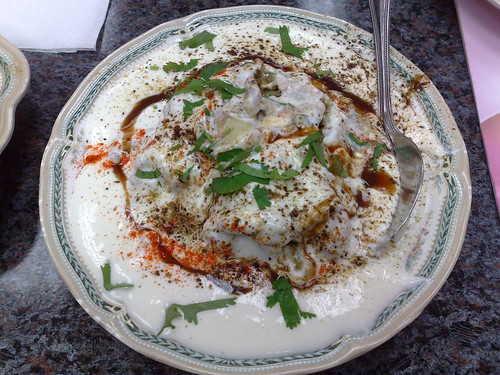 Dahi bhalla also called as Dahi bhalle is a popular street food which is normally counted among "chaat". Dahi Bhalla is often a special food during the Holi festival too. Dahi bhalle is made of dal pakodas and tangy yoghurt and garnished with tangy and sweet chutneys. This can be widely seen in the streets of big and small cities. Dahi Bhalle is wadas dunked in loads of chilled and seasoned curds and then topped with tamarind chutney and spices. Though usually, dahi bhallas are tastier at the roadside vendor's shop, it is not that possible to bring that yummy taste at home but it can be made at par with them by using roasted cummin powder, chat masala, black salt , tamarind chutney and red chilli powder. I have tasted different variation of this. Some like their curds to be sweet, others like it salty. The Gujarati version has a sweet and spicy flavor and uses liberal amounts of curds. The Punjabi version is salty and the wadas are just submerged in the curds but not floating in it. The dahi wada that I've tasted in Udipi cafes has tempered sweet curds. But for a good yummy taste, it is best to mix up and prepare.Ingredients:For The Bhalla:
1 cup Black gram, split (dhuli urad dal)
2 cups (500 ml) Water
1/2 tsp Salt
1 tsp ( Cumin (jeera) seeds
2 tsp ( Ginger (adrak), chopped
1 tsp Green chillies, chopped
1 1/4 cups (250 ml) Vegetable oil.
For The Dahi:
2 cups ( Yoghurt (dahi), thick, whisked
1 tsp Sugar
1/2 tsp Salt
1 tsp Cumin seeds, roasted, pounded
1/2 tsp Black salt (kala namak)
1/2 tsp White pepper (safed mirch) powder.
For The Garnishings:
1 tsp Ginger, julienned
1 tsp Green chillies, julienned
1 tbsp coriander (hara dhaniya), chopped
a pinch Red chilli powder
a pinch Cumin seeds, roasted, pounded
4 sprigs Mint (pudina) leaves
3 tbsp Tamarind chutney (sonth)
Method:- For the bhalla, clean the black gram and soak in water for 2 hours. Drain and grind to a fine paste, adding very little water.
- Remove to a mixing bowl and add salt, cumin seeds, ginger, and green chillies. Mix well and shape into even-sized balls.
- Heat the oil in a wok (kadhai).
- Add the prepared balls, a few at a time, and deep fry till golden brown, (Make a hole in the centre of the ball with the thumb just before frying.)
- Remove and drain the excess oil on absorbent paper towels.
- Soak the prepared bhalla in lukewarm water till soft.
- For the yoghurt mixture, add all the ingredients and mix well.
- Remove the bhalla from water, squeeze out excess water and add to the yoghurt mixture. Keep aside for 10 - 15 minutes.
- Serve chilled, garnished with ginger, green chillies, green coriander, red chilli powder, cumin powder, mint leaves, and tamarind chutney .
20 minutes (excluding soaking time).
Cooking time : 30 minutes.
Serves : 4 persons. Makes some 8- 12 wadas.
Shelflife : Best fresh.
Serving suggestion : Serve with chilled dahi and garnishings.
Other Method:- Make the batter little thin. But not very watter, just enough to be fluffy. Then pour it into hot oil using a spoon and deep fry it till golden brown.
Note:- Cooking soda can be added to make the wadas spongy and crispy.
- Freeze the wadas for sometime for better taste.
- Use roasted cummin powder for garnishing.
Click here to know more about Punjabi Foods and Cuisines -
An Introduction To Punjabi Foods And Cuisines.
 Methi Pakora , one more greens to my list of recipes in the blog. But this one is a snack, unlike the others which were side dishes or main course. Methi (Fenugreek leaves) is a full of medicinal properties. Methi has good benefits for diabetic patients, nursing mothers and for those who want to reduce cholestrol. This is a wonder herb popular in India, rich in protein, calcium, phosperous and iron in its natural form. Its mineral and vitamin content is also very high and is easily assimilated by our body. The fibre content in Methi is effective in stabilizing blood sugar levels by just having 1/2 cup of methi leaves daily or a spoon of methi seeds with milk taken an hour before meals. Methi is cooked in various form in India be it main course, side dish or a quick to eat snack. Methi pakoras are one such snacks, and it is a good source of food. Methi pakora is simple to prepare and easy to digest. I hope this recipe would be liked and enjoyed.Ingredients:
1 cup chopped methi leaves (Fenugreek leaves)
2 chopped onions
1 teaspoon Turmeric powder
1/2 teaspoon Red chilli powder
2 cups Besan (Gram flour)
1 teaspoon Amchur powder (Dry Mango powder)
Salt to taste
3 cups oil for frying.
Method:- Add water to besan and make thick batter. Add the water in small amounts to avoid forming of lumps.
- Add chopped methi leaves, chopped onions,turmeric powder, red chili powder, and mango powder and salt to the besan batter and make a mixture.
- Heat the oil.
- Fry small portions of this mixture in oil till they turn brown. You can take the portions with the help of your hands or with spoon.
- Serve hot with green chutney.
Preparation Time: 10 minutes.
Cooking Time: 20 minutes.
Serves: 4 persons.
Shelflife: Best fresh.
Serving suggestion: Serve hot with green chutney.
Note:- Add water in small amount to avoid forming of lumps.
- The amount of red chilli powder can be adjusted as per taste.
Click here to know more about Punjabi Foods and Cuisines -
An Introduction To Punjabi Foods And Cuisines.
 Its monsoons and everyone of us would love to sit at home nearby the windows or at balcony and enjoy garam garam pakoras and enjoy watching the rains in a chilly wet evening. Pakoras are favourite among every indian, being young or old. And everyone loves to have them during monsoons. Punjabi style pakoras are known for their crispy and spicy taste. There are varieties of pakoras like Aloo pakoras, Gobi pakoras, Palak pakoras etc. One such pakoras is Paneer pakora, which is just tempting during chilled evenings. Paneer Pakoras is a well known snack from Punjab and I thought of posting this now since the period of monsoons are just perfect to share this recipe and enjoy them.Ingredients:
250 grams Paneer (Cottage cheese)
8 tablespoons Gram flour (Besan)
2 tablespoons Corn flour or Rice flour
2 tablespoons Red chilli powder
1 1/2 tablespoons Amchur powder (Dry mango powder)
1 pinch Ajwain (Carom seeds)
1 pinch Hing (Asafoetida)
1/4 teaspoon Cooking soda
Water as per requirement
Oil for frying.
Method:- Firstly cut the cheese into thick square pieces.Cut them in size of 3 inches wide and 2 inches broad and height of atleat 1 inch.
- Sprinkle mango powder and red chilli powder on these pieces.
- Mix the gram flour,rice or corn flour, red chilli powder,amchur powder, hing, ajwain, soda and salt in a bowl.
- Add some water to the mixture to make it thick batter.Dont add more water at a start. Add part by part in small quantity to avoid forming lumps , this helps in making smooth batter. Add water only to the consistency to make the batter smooth . Dont add too much of water and end up making its consistency too thin.
- Dip each piece of the cheese in this batter.
- Heat the oil in a frying pan.
- Check whether the oil is hot enough. This can be checked by dropping few drops of the batter into the oil. If it is hot enough to fry the pakoras, then you can see those batter coming up and bubbles surrounding them indicating its ready for frying the pakoras.
- Now put the pieces of cheese in the heated oil one by one.
- Fry them till they become golden brown.
- Remove them in a Oil absorbent paper or place a tissue paper at the top of the plate where the pakoras would taken out.
- Paneer Pakoras are ready.
- Serve the Paneer Pakoras with green chutney or with tomato ketchup.
Preparation time: 10 minutes
Cooking time: 20 minutes
Serves: 4 persons
Shelflife: Best fresh
Serving suggestion: Serve hot with green chutney or tomato ketchup.
Note:- Normally, rice or corn flour is not added to the batter. But adding 2tablespoons of corn or rice flour would make the pakoras crispy and crunchy.
- Amchur powder is added to give a tangy taste .
- Sprinkle a pinch of chat masala over the paneer pakoras while serving. It makes them even more tastier.
Click here to know more about Punjabi Foods and Cuisines -
An Introduction To Punjabi Foods And Cuisines.

 Chicken saagwala is a Indian name which means chicken cooked in spinach. It is a well known cuisine from Punjab and is healthy . I have shared few green veg and non veg recipes in the blog, chicken saagwala is one more addition to those list. Chicken saagwala is cooked using chicken, spinach, tomatoes and few spices. It is served with either Roti, naan or rice. It tastes good with Matar pulav. Punjabis are fond of chicken and greens and this comes under their preferred food.Hope you would enjoy this recipe.
Ingredients:
1 Chicken-cut into pieces
3 Cups pureed spinach
1 tsp Cumin seeds
1 Bay leaf
1 tsp ginger paste
1 tsp garlic paste
1/2 Cup onions-chopped finely or paste
1/4 Cup tomato puree
2 tsp Salt
1/4 tsp Garam Masala
1/2 tsp Powdered red pepper
1 tsp Powdered coriander seeds
Cream for garnish
Method:- Heat about 1 cup of oil and add cumin, when it splutters, add bay leaf, ginger and the garlic, and saute till a light brown.
- Add onions and saute till soft.
- Add the chicken over high heat and turn around till opaque.
- Lower the heat and let it cook, stirring a few times, till tender.
- Add tomato puree and stir fry till fat separates. The oil should be floating on the surface or on the sides of the pan.
- Add the salt, garam masala and the red pepper and stir till well mixed.
- Add spinach and saute for 2-3 minutes.
- Turn around a few times and serve hot garnished with the cream.
- Chicken Saagwala is ready.
- Serve it hot with Roti or Naan. Even pulav goes well with it.
Preparation time: 10 minutes
Cooking time: 30 minutes
Serves: 4 persons
Shelflife: 1 day
Serving Suggestion: Serve hot with roti, naan or pulav.
Note: Blanch the spinach and make puree of it for better taste. Blanching means chopping the spinach into small then, cook it in boiled water for few minutes, till it is cooked. It would turn dark green and tender soft when cooked. Then drain it, and allow it to cool for few minutes. Once it is cooled, blend it over mixer into puree.
Click here to know more about Punjabi Foods and Cuisines -
An Introduction To Punjabi Foods And Cuisines.
 Kadhai chicken is a chicken curry recipe which is usually cooked in kadhai/skillet. Kadhai is a wok-type utensil used in Indian cooking. The speciality of kadhai chicken is, it is not only cooked in kadhai/skillet but also it is served in kadhai/skillet. The idea of kadhai chicken is to cook all the ingredients in tomato based thick gravy and in their natural juices. Kadai chicken is also called as Karahi chicken and it gets it best colour and taste from the kadai it is cooked on. So it is best when cooked in iron kadai. Indian kadai is similar to chinese wok except that kadai is deep bottomed and is available in various metal forms like steel, iron, plastic, brass, copper, copper-bottomed and non stick. Kadai chicken is simple and easy to cook and is ideal on special occassions. This cuisine can be found on the menu cards in every restaurant worldwide where indian food is served. And it is a cuisine from the land of Punjab, which is known widely for its culture and food
.
 Here is a reference to the Indian kadai. This kadai is a stainless steel kadai. But kadai is also available in various metals like brass, copper, copper- bottomed, iron and non stick. In restaurents, kadai chicken is served in brass or copper bottomed /copper kadai, which makes it look elegant.Ingredients:
Chicken - 1 kg , cut into big pieces
Coriander seeds - 2 tablespoons
Cumin seeds - 2 teaspoons
Blackpepper - 6
Whole dry red chillies - 6
Garam Masala - 2 tablespoons
Ginger - 2 inch piece / 2 tablespoons
Garlic cloves - 15 nos /3 tablespoons
Ghee - 2 tablespoons
Oil - 2 tablespoons
Tomatoes - 4-5 Large nos
Onions- 1 , chopped
Fresh coriander leaves - 2 tablespoons
Green chillies - 4, silted
Salt - to taste.
Kasuri methi - 1 teaspoon.
Method:- Dry roast coriander seeds, cumin seeds and black peppercorns and grind to a coarse powder.
- Grind red chillies, ginger and garlic to a fine paste. Heat ghee and oil in a kadai, add onion and sauté till lightly browned.
- Add half the coarsely ground spice powder and red chilli-ginger-garlic paste and continue to sauté for three to four minutes. Add the silted green chillies and saute for a minute.
- Add tomatoes and salt and continue to sauté till the tomatoes become soft.
- Add the chicken and saute. Simmer for 5 minutes.
- Stir occassionally till the gravy is little thick and gets sticked to the chicken. Check that the chicken is tender by now. Oil could be seen on the surface by now or on the sides of the pan.
- Once the chicken is tender, add half a cup of water and stir well. Cover it with lid and cook in medium flame for 5 minutes till the chicken is done and the gravy look thick and rich.
- Once the saturated fat and oil surfaces on the top, add the garam masala and kasuri methi and cook further for 2 minutes .
- Kadai or Karahi chicken is ready. Garnish it with chopped coriander leaves and serve hot with Roti or Naan.
Preparation Time: 10 minutes
Cooking Time: 30 minutes
Serves: 4 persons
Shelflife: 1 day
Serving suggestions : Serve hot with Roti or Naan.
Note:- Chop the tomatoes finely.
- Cut the chicken in big pieces.
- Crush the kasuri methi in your palms and add the gravy.
- Use Ghee and Oil in equally for more control on calories.
Click here to know more about Punjabi Foods and Cuisines -
An Introduction To Punjabi Foods And Cuisines
 One more green leafy veg recipe to the platter. This recipe is Aloo Palak, again a side dish from Punjab served with rice and chapatis/phulkas. It is cooked using main ingredients potatoes, spinach, tomatoes and few masalas. It is a simple and easy to cook recipe. And it takes hardly few minutes to cook it. Green veggies are good for health and if cooked with pototoes, it makes it intresting . Though green veg recipes are boring, this would not be that boring but tasty.Ingredients:
2 Bunches palak
2 Potatoes
2 Tomatoes
1 Onion
2 Garlic flakes
1 Ginger
1 tsp cumin powder
1 tsp Corainder powder
1/2 tsp Red chilli powder
1/2 tsp Turmeric powder
Salt to taste
Oil for frying.
Method:- Wash and clean the palak, chop them and set aside
- Cut the potatoes into small cubes.
- Chop the tomatoes into small pieces.
- Grind ginger and garlic to make a paste.
- Chop the onions into small pieces
- Take 2 tablespoons of oil in a kadai, and add the chopped onions. Fry onions till they turn transparent.
- Add cumin powder, coriander powder, red chilli powder and turmeric powder to it and saute for a minute.
- Add ginger garlic paste. Saute them till the raw smell of ginger and garlic goes, so fry them for 1-2 mins.
- Add the tomatoes and saute till oil leaves the sides of the pan and the tomatoes are tender soft.
- Now add the potatoes and cook it with closed lid for 5 mins.
- Add chopped palak and salt and mix well. Cover the kadai with lid and cook for 20 mins on medium flame.
- Open the lid and check the dish, palak must be well cooked and turned into dark green colour.
- Aloo palak is ready to serve. Serve hot with rice or chapathis.
Preparation time: 10 minutes
Cooking time: 25 minutes.
Serves: 4 persons
Shelflife: 1 day.
Serving suggestions: Serve hot with rice or chapatis.
Note:- Cook the dish in its own water. Dont add extra water.
- This dish needs no garnishing. But if needed, decorate it with chopped tomatoes .
- Few like this dish in the form of gravy. In that case, blanch the spinach and grind it to paste.
Click here to know more about Punjabi Foods and Cuisines -
An Introduction To Punjabi Foods And Cuisines
 Aloo Methi is a side dish served with rice , such side dishes are called sabzis in India. Aloo is a cuisine popular among North Indians from the places of Punjab, UP, Bihar and Delhi. It is a dry curry and taste is simple and is good for health. Green vegetables are considered good for people belonging to every age. But green vegetables are considered boring, but with dishes like Aloo Methi, they can be made wonderful. This cuisine looks simple and it is even more simple and esy to cook. It can be served with rice as a side dish or even served with Chapathis.Ingredients:
Fenugreek leaves -2 cups (cleaned, washed and finely chopped)
Potatoes - 4 -5 nos ( peeled and cut into cubes of small pieces)
Tomato - 1 medium (chopped into small pieces)
Garlic cloves - 1-2 nos (crushed)
Green chillies - 1-2 nos (silted)
Onion - 1 small (chopped)
Turmeric powder - 1/4 teaspoon
Red chilli powder - 1/2 teaspoon
Cumin seeds - 1/2 teaspoon
Whole dry red chillies - 2
Asafoetida - a pinch
Garam masala powder - 2 -3 pinches
Salt -to taste
Oil - 2 tablespoons.
Method:- Wash the fenugreek leaves thoroughly several times and chop them fine. Sprinkle some salt over them and keep aside for about half an hour.Sprinkling salt water removes a sour taste which fenugreek leaves have. This step of sprinkling salt water can also be avoided .
- Heat oil and add crushed garlic and fry till brown. Add cumin seeds , asafoetida, dry red chilies, chopped onions and silted green chillies. Saute them till onions turn golden brown.
- When cumin seeds crackle and onions and chillies are brown, add turmeric powder, chilli powder and tomatoes. Saute them till tomotes are tender soft.
- Now add the potatoes and saute them. Add salt and saute them for a minute. Sprinkle some water and close the lid and cook on medium flame till the tomatoes are half done. Even potatoes can be pre-boiled and chopped into cubes. In that case, just add the potatoes and stir for a minute, dont cook for long time .
- When pototoes are half cooked and the spices gets coated over them, add the methi leaves and cook them on medium flame for 5 minutes or till water is fully absorbed. ( If you are cooking on low flame , cook for 15 minutes). And see to it that all the water is evaporated. This indictes that the methi is well cooked.
- Finally add 2-3 pinches of garam masala to it and stir for a minute.
- Aloo methi is ready to serve. Serve them hot with steamed rice or chapathis.
Preparation Time: 10 minutes
Cooking Time: 20 minutes.
Serves: 4 persons.
Shelflife: 1 day.
Serving suggestion: Serve hot with steamed plain rice or Chapatis.
Note:- This curry is served dry. But those who prefer it as gravy can add 1 glass of water at the end and cook for few minutes.
- As a variation, the potatoes can be boiled first and then cubed. In this case, the fenugreek leaves should be first squeezed of all the salt water and added to the oil seasoned with spices. Cover and cook for a few minutes and then add the boiled potato cubes. Mix well and cook covered for a little while.
- This dish doesnt require any garnishing. But still those who prefer garnish can add few chopped tomatoes pieces on the top and serve it hot.
Click here to know more about Punjabi Foods and Cuisines -
An Introduction To Punjabi Foods And Cuisines
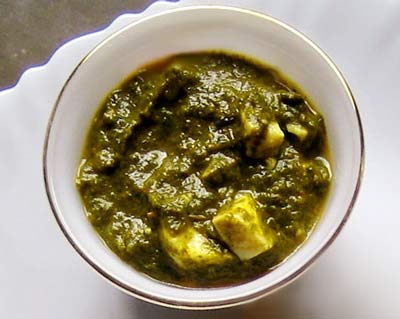 Often people avoid green vegetables. And green vegetables are considered boring and tasteless.But there are few cuisines which are not boring and tastes delicious. Palak Paneer is one such splendid cuisine, which not only looks delightful but also tastes awesome. Palak is the Indian Hindi word for Spinach and Paneer is the Indian version of Cottage Cheese. In most of the foods, be it fast food, or western version , Spinach and Paneer when combined makes the food look beautiful and creates a yummy taste. Palak Paneer is a food fromNorthen states of India like Punjab, UP, Kashmiri and Delhi. And is served with Jeera rice or plain rice. This cuisine is made using main ingredients Spinach, paneer and few spices. It is easy to prepare and can be seen in the menu of special ocassions. Paneer is easily available in stores anywhere be it India or other countries, if not then it can also be prepared at home. I will include a post on making paneer at home. But when you are short of time, buying readymade paneer from store is best option. The creamy texture of spinach with paneer is a very good combination.Ingredients:
Spinach - 2 Large bunches or frozen spinach 500 grams
Paneer (Cottage Cheese) - 200 grams
Onion - 1
Butter - 3 tablespoons
Bay leaves - 3 -4
Cumin seeds - 1 teaspoons
Black pepper powder - 1 2/ teaspoon
Tomatoes - 2 either diced or puree ( I recommend Puree for good gravy)
Ginger- Garlic Paste - 1 tablespoon
Green Chillies - 1/2 teaspoon
Coriander Powder - 1 teaspoon
Turmeric Powder - 1/2 teaspoon
Red chilli powder or caynne powder - 1/2 teaspoon
Asafoetida - a pinch
Garam masala powder - 1/2 teaspoon
Oil - 1 tablespoon
Fresh Cream - 1/2 cup
Whole Wheat flour - 2 tablespoons (optional- only if you find the spinach gravy or cream very thin in consistency).
Salt - to taste.
Method:- If using frozen spinach thaw and blend it just for a minute so spinach has a creamy texture but without becoming pasty. OR
- Mix green chilli paste and ginger-garlic paste with spinach. Add little water (if you are using spinach leaves).
- Pressure-cook the above mixture for 7 to 8 minutes. Remove before the first whistle.
- Cut cheese into small cube shaped pieces. Keep 3 cubes for decoration.
- Blend the tomatoes to make puree.
- Mix coriander, turmeric, garam masala, black pepper powder and red chili with tomato puree and set aside.
- Mix whole-wheat flour with heavy cream and set aside. ( This step is necessary only if you find the spinach puree and cream to be thin in consistency) . Normally green vegetable retains some water to it, so does dairy product. As a result, while cooking they tend to leave more moisture or water , hence adding wheat flour will help it thicken.
- Cube the paneer in about half inch pieces and deep fry them on medium high heat just for few minutes so paneer become very light gold in color, take paneer out on paper towel so extra oil can be absorbed.
- Heat the oil in a saucepan. Add the butter to it and onions to it. Saute till it turns pink.
- Add hing and cumin seed. After cumin seeds crack, add the tomato puree mixture, and let it cook for a few minutes until the tomato puree is about half in volume.
- Add the spinach, and let it cook on low medium heat for about 10 minutes covered.
- Add heavy cream mixture and let this cook another four to five minutes.
- Add paneer and fold it gently with spinach and let it simmer for a 2-3 minutes.
- Keep the pan or tawa or whichever utensil you are using for cooking palak paneer , closed with a lid or plate to avoid the spinach to splatter and thus leaving you with boils or any mishap. Or to , you can also bake it on oven over 180 degree C for 30 minutes.
- Transfer the spinach to a serving dish and spread the tomato slices over the top, and cover the dish so tomato slices get tender with the steam from the spinach.
Preparation Time: 30 minutes
Cooking Time: 30 minutes
Serves: 4 persons
Shelflife: 1 day
Serving suggestions : Serve hot with steamed hot rice or jeera rice.
Note:- You can replace the heavy cream with 1 1/2 cups of milk.
- Keep the pan or tawa or whichever utensil you are using for cooking palak paneer , closed with a lid or plate to avoid the spinach to splatter and thus leaving you with boils or any mishap. Or to , you can also bake it on oven over 180 degree C for 30 minutes.
- Normally green vegetable retains some water to it, so does dairy product. As a result, while cooking they tend to leave more moisture or water , hence adding wheat flour will help it thicken.
- Cream is added to make the taste of Palak paneer intresting and taste. Since most of them dont like the taste of green vegetables especially kids. Adding cream will enhance the taste and make it look delightful.
Click here to know more about Punjabi Foods and Cuisines -
An Introduction To Punjabi Foods And Cuisines
 Panner is a dairy product also known as Cottage Cheese. Kadai Paneer is a Punjabi and Delhi Delicacy and is very popular world wide. This cuisine can be found in the menu cards of every small and big restaurants in India and other parts of the world where Indian food is served. The word "Kadai" is a Hindi word which means a deel bottomed vessel with handles on both sides (see the utensil/vessel in the above pic for reference). Kadai Paneer is spicy side dish which is cooked using the main ingredient Paneer along with capsicum, tomatoes and few spices for taste. It is dish without much gravy but is not even a dry dish. Tomatoes are added to give it a tender fresh gravy like consistency which other spices are added without being grounded to keep the freshness of paneer intact. Kadai Paneer goes well with Pulao, Briyani, Jeera Rice and also Rotis and Naans. It is easy to cook where the Cottage cheese (paneer) is and bell peppers or capsicum is cooked with spicy tomatoes or its gravy. Ingredients:
Paneer (Cottage Cheese) - 500 grams, cut in cubes or triangles
Red Bell Pepper (Shimla Mirch/Capsicum) - 1 meduim
Green Bell Pepper (shimla mirch/ Capsicum) -1 medium
Tomatoes - 3-4 nos medium, chopped
Red Chilli powder (Cayenne powder) -1 1/2 teaspoons
Coriander seeds (crushed/ powder) - 1 1/2 teaspoons
Onion Sliced -1 medium
Cloves -2
Whole dried chillies - 2
Bay leaves - 2
Cinnamon stick (1 inch stick) -2
Ginger paste - 2 teaspoons
Garlic Paste - 2 pteaspoons
Asafoetida - 1 pinch
Green chilli - 1
Cumin seeds - 1 teaspoon
Turmeric powder - 1 /2 teaspoon
Oil - 3 tablespoons
Salt - To taste
Freshly chopped Coriander leaves / Dry Kasuri methi - 2 tablespoons.
Method:- Cut paneer and bell peppers into ½ inch cubes.
- Blend the tomatoes, ginger, and green chili to make a puree. ( Even Chopped Tomatoes can be used for this cooking).
- Heat the oil in frying pan on medium heat and stir fry paneer for about 2 minutes - take them out before paneer starts changing color.
- Next stir-fry bell pepper until they are tender. Do not over cook the bell pepper. Take them out and drain on a paper towel.
- Using the same frying pan, Test the oil by adding one cumin seed to the oil; if seed cracks right away oil is ready.
- Add the asafetida and cumin seeds.
- After the cumin seeds crack, add the cloves, cinammon, Bayleaves, dried red chillies and onion. Saute it till onion changes its colour to light brown.
- Add the tomato puree, coriander powder, turmeric, fenugreek leaves and cayenne pepper.
- Cook for about 4 minutes on medium heat.
- Tomato mixture will reduce to about half in volume.
- Add about 2 spoons of water, and the salt.
- Wait till gravy comes to boil add paneer and bell pepper and let it simmer for about five minutes on low medium heat. Stir gently after adding the paneer to the gravy.
- Now it is ready to serve. Garnish with coriander leaves or kasuri methi, toss and serve.
Preparation Time: 10 minutes
Cooking Time: 15 minutes
Serves: 4 persons
Shelflife: Best fresh and stays for 1 day
Serving Suggestions: Serve hot with Jeera rice, Pulao or Briyani. It can also be served with Roti or Naan.
Note:- Instead of frying the paneer, we can also put the paneer pieces in a cup of water and heat it in the microwave oven for 1:30 min. then drain the water and use the paneer immediately.
- Tomatoes can be chopped and used too instead of blended puree.
- Dont stir roughly or more after adding the Paneer. Those who are afraid or new to cooking , better use Non-stick kadai.
Click here to know more about Punjabi Foods and Cuisines -
An Introduction To Punjabi Foods And Cuisines
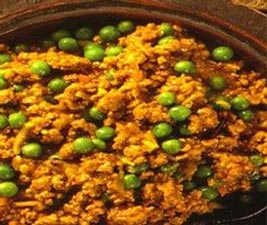 Khoya mattar is a Punjabi cuisine which is high in calorie and delicious in taste.
 Khoa or khoya or khawa or mawa is a milk food, made of either dried whole milk or milk thickened by heating milk in an open iron pan.It is similar to , but lower in moisture and made from whole milk instead of whey. There are three types of khoya - batti, chickna, and daan-e-daar. Batti, meaning “rock,” has 50% moisture by weight and is the hardest of the three types; it can be grated like cheese. It can be aged for up to a year, during which it develops a unique aroma and a mouldy outer surface. Chickna (“slippery” or “squishy”) khoya has 80% moisture. For daan-e-daar, the milk is coagulated with an acid during the simmering and has moderate moisture content. Different Khoya is used for different preparation. Khoa is used as the base for a wide variety of Indian sweets. Khoa is normally white or pale yellow. Khoa prepared in the winter may be saved for use in the summer and may acquire a green tinge and grainier texture from a surface mould.Khoa is made by simmering milk in an iron karahi for several hours, over a medium fire. The gradual vaporization of its water content leaves coagulated solids in milk, which is khoa. Khoya is used in various types of sweets such as pedha penda in Gujarati), barfi(or burfi) and halwa.
This cuisine is prepared using daanedar khoya and matter(peas) as main ingredients along with few spices for taste and falvour. It goes well with rotis and can be counted among unique dishes for serving guests.
Ingredients:
1 cup green peas
500 gms milk solids (khoya)500 gm
3 tblsp cashewnuts (broken)
1/2 cup bread croutons
1/2 tsp red chillies crushed
1 tsp red chilli powder
2 tblsp raisins
1/2 tsp turmeric powder
1/2 tblsp oil
2 green chillies chopped
1/2 tblsp ginger garlic paste
1 tsp sesame seeds roasted
saltto taste
1 tsp coriander powder
1/2 cup onion paste
1 tblsp coriander leaves chopped
1/2 cup tomato puree.
Method:- Roast the khoya slightly.
- Keep aside.
- Boil green peas.
- Heat up oil in a pan, mix in onion paste and stir fry till pink.
- Mix in ginger-garlic paste and saute.
- Mix in tomato puree, turmeric powder, red chilli powder and roast till the oil leaves the masala.
- Mix in boiled peas and stir.
- Mix in salt, roasted khoya and stir.
- Mix in salt, roasted khoya and stir.
- Mix in coriander powder and stir to mix well.
- Take off the heat.
- Sprinkle cut green chillies, roasted sesame seeds, crushed red chillies on the bread croutons and mix well.
- To serve assemble the khoya-peas masala in a dish and cover with bread crouton mixture.
- Sprinkle with cut coriander.
Preparation Time: 15 minutes
Cooking Time: 15 minutes.
Serves: 4 persons.
Shelflife: 1 day.
Serving suggestions: Serve hot with Rotis or Naan.
Note: Use daan-e-daar khoya for this recipe. Daan-e-daar khoya looks like granules and is best for cooking this recipe. Dont roast the khoya for long or else, it might get sticky . Just roast slightly on medium or low flame for 2 minutes.
Click here to know more about Punjabi Foods and Cuisines -
An Introduction To Punjabi Foods And Cuisines.
 Parathas are popular Indian breads from Punjab. A Paratha can be made simple and at the same time, it can be made delicious with stuffed ingredients too. Thus, various stuffed parathas are prepared like mooli paratha, gobi paratha, methi paratha, onion paratha etc. This stuffed parathas are made by stuffing the main ingredients namely, gobi, onion, mooli etc with some spices added to it. This gives a yummy taste to the bread and it hardly needs any side dish to be served along. In Punjab, Usually such Parathas are served with Dahi and pickles. And it really goes well with them, it tastes delicious and makes one want more for it. In the earlier post, I have posted Mooli Paratha, this time its Gobi Paratha. Gobi Paratha is easily to prepare and doesnt need much preparation besides grating of gobi
.
 This is how a stuffed Gobi Paratha looks like before it is rolled out . Be sure to cover the stuff inside the dough.Ingredients:
 | Whole wheat flour (atta) | 3 cups + for dusting |
| Salt | to taste |
| Ghee | to shallow fry+ tablespoons |
| Cauliflower | 1 medium |
| Fresh mint leaves | a few |
| Fresh coriander leaves bunch | 1/2 medium |
| Green chilli | 3 |
| Ginger | 1/2 1/2 inch pieces |
| Dry mango powder (amchur) | 1 tablespoons |
| Red chilli | 1/2 teaspoon |
Ajwain (optional) 1/2 teaspoon.
Method:- Mix together salt and flour and rub in two tablespoons of ghee, then add enough water to make a stiff dough.
- Keep covered for fifteen to twenty minutes.
- Wash and grate cauliflower.
- Clean, wash and finely chop coriander leaves and mint leaves.
- Remove stems, wash and crush green chillies.
- Peel, wash and grate ginger.
- Mix these ingredients together adding amchur, salt to taste and red chilli powder.
- Divide dough in lemon-sized balls, roll out each ball into a medium thick chapati using flour for dusting.
- Spread the cauliflower mixture on half of one chapati and cover with the other half and seal the edges.
- Sprinkle a little flour on top, and roll the semi-circle a little taking care not to break it. Alternatively, pat with fingers.
- Heat a tawa and cook the parantha on both sides. Shallow fry to golden brown using a little ghee.
- Serve hot with butter and a bowl of raita or dahi and pickle.
Preparation Time: 30 minutes
Cooking Time: 30 minutes
Serves: 4 persons
Shelflife: Best fresh and stays upto 1 day.
Serving suggestions: Raita, dahi or pickle.
Note:- Some people do add garam masala to tha stuffing, I havent added it since garam masala doesnt give a distinct taste to the paratha. Amchur on the other hand, doesnt let the taste of cauliflour out of the paratha , thus making it unique.
Click here to know more about Punjabi Foods and Cuisines -
An Introduction To Punjabi Foods And Cuisines.
 Sag Gosht is a popular Indian cuisine which is now popular not only in India but all among the middle-east countries. This Sag Gosht is a recipe from Punjab and the word sag is a punjabi word which means spinach. This is a greeny cuisine and is healthy and delicious at the same time. Sag can be found in the menu of top restaurants. It is served with Roti or Naan. It can be prepared easily at home as it requires less ingredients. This Sag Gosht can be cooked in Oven too. Hence, just read this and try it . It is worth on your dining table, and all of you would love it
.
Ingredients:Lamb - 1/2 Kilo
Medium Sized Onion 1 - chopped finely
Green Chillies - 3 chopped
Garlic cloves, crushed - 2
Rai or Mustard Seeds - 1.5 tbs.
Ghee or Oil - 4 tablespoons. ( Saag usually needs more oil)
Spinach - washed and chopped 1/2 kilo ( You can use the frozen Spinach as well)
Ginger Paste 1 tablespoon
Haldi or Turmeric 1 teaspoon
Coriander Powder 1 tablespoon
Choti Ilaychi or ( Green Cardamom powder) 1/4 teaspoon
Garlic paste 1 teaspoon
Sugar - 1 teaspoon.
Salt - 1.5 teaspoon ( vary it as per taste).
Black Pepper crushed 1/2 teaspoon
Dahi ( Yogurt )- 3 tablespoon
Garam Masala 1 tablespoon.
Method:- Take a heavy bottomed pan and put on heat.
- Add oil or ghee and add the mustard seeds and fry until the seeds begin to pop.
- Add the garlic and fry for a minute.
- Add the lamb cubes and fry for 5 minutes.
- Add the ginger paste and stir.
- Add the Green chillies and stir
- Add some salt ( to help cook the lamb) and stir.
- Cook the lamb for few more minutes until evenly browned. ( Remember you don't have to cook it completely).
- Now add the onions and stir.
- Add some turmeric and stir. ( Turmeric is great for killing all germs as well)
- Keep on stirring until the onions are golden brown.
- Add the sugar and stir.
- Add the Garam masala and stir.
- Add the finely chopped spinach and stir well.
- Add the Cardamom Powder and stir.
- Add the Coriander Powder and stir.
- Take the pan off the heat and add the dahi or Yoghurt and stir and put it back on heat again.
- Add the Amchoor Powder and stir( Amchoor is used to give a slightly tangy taste), if you wish you can avoid it or use fresh lime juice while serving.
- Now put this mixture in a pressure cooker and cook for 20 minutes. ( If you do not have a pressure cooker then keep on cooking in the same pan for about 45 - 60 minutes with lid and on slow heat ).
- If you prefer to cook in Oven then you can transfer this mixture to an Oven Dish and cook in a preheated oven at 150C ( Gas Mark 2 , 300F) for 20 minutes.
Preparation Time: 20 minutes
Cooking Time: 25 minutes
Serves: 4 persons
Shelflife: 1 day.
Serving Suggestions: Serve Hot with Roti, Naan or Paratha.
Note:- If you wish to make a smooth paste of the spinach then you can take out the meat cubes from it and use a hand blender in the pan to blend it . Then add the meat peaces back in.
- You can sprinkle some lime juice on top if you wish.
Or Add some butter on top.
Click here to know more about Punjabi Foods and Cuisines -
An Introduction To Punjabi Foods And Cuisines.

 Lassi, here comes my favourite beverage. I am die hard fan of lassi and i never any reason for having it. Whenever am at home, I make it a point of having this lassi and ejoy it sip by sip. Lassi is as such known all over the world, it even bagged prize for best beverage last year during a international beverage competition. Any takers of lassi? huh.








 Posts
Posts




