Photobucket
Showing posts with label Sabzis. Show all posts
●๋•∂нαηαѕняєє●๋•


I have been blogging less these days and i am sorry for that. Blogging really takes much time and these days due to alma mater, am not able to get time for blog. Well, I will definately look to it that i take time off for blogging henceforth. I had clicked and cooked plenty of new recipes and want to post them but unfortunately I failed to do so.
Today am posting a sabzi recipe. I wanted to post some recipes which really takes less time and doesn't require too many ingredients. So I thought of posting this sabzi. Well, most of us love spring onion due to its unique taste and blending with other ingredients. Spring onion is one such vegetable with is easy in cooking compared to other vegetables. It gives a extra kick to the food and hence is found in most fast foods these days. It can be used in salads, pancakes and salsas and so on.
As the name suggests, these leafy vegetables comes only during seasons. They look very much like green onions except that they have bulb which are longer and defined. The bulbs and leaves both are used for cooking. Spring onions can be used for decorations, salads, stir fried and whatever way you wish to use them.
Always pick fresh spring onions from market since they tend to spoil fast if stored. Always select those spring onions which have crispier leaves and has rich green colour in them with hard bulb. Never pick those which are slim, wilted and discoloured or else you will end up wasting your money. Discard and peel  the outer layer of the spring onion , that will give you a richer crisp taste. 
In case, you have a big garden at your residence better plant them since they grow faster and you will get to taste organic spring onions. My grandmother has them in her garden at our native place and it really tastes much better than those available at the markets.
Coming to the recipe, this one can be called a typical maharashtrian recipe and it goes well with dal chawal and chapatis.


Ingredients:
Spring onions - 2 bunches
Mustard seeds - 1/2 teaspoon
Turmeric powder - 1/4 teaspoon
Red chilly powder - 1 teaspoon
Asafoetida - 1 pinch
Salt - to taste
oil - 1 teaspoon


Method:
  1.  Pick fresh spring onions with crisp leaves since they are much taster and healthy.
  2. Wash them nicely under tap water and let them dry for few minutes.
  3. Peel the outer layer of the spring onion . This is would give you good crispness to the food as the outer layer tends to wilted and tasteless due to over exposure to the environment.
  4. Chop them into 1 inch pieces . Chop the bulbs in a way that you get in ring shapes as it them look nice especially to the childrens.
  5. Keep a kadai over flame and add oil in it. Let the oil to heat for a minute.
  6. Once the oil gets hot, add Asafoetida and  Mustard seeds. Let the seeds crackle.
  7. Now add the chopped spring onions and saute them for a minute. Don't add water. Spring onions have natural moisture in them and let the vegetable to cook in its own water content so that becomes tastier and healthier.
  8. Add the turmeric powder and chilly powder and saute for a minute.
  9. Add salt as per taste and saute it well. 
  10. Keep sating for some 7-8 minutes.
  11. Once the vegetable is cooked well, it will be tender soft and will be transparent .
  12. Remove and serve hot with chapatis or dal chawal.

Preparation time: 15 minutes.
Cooking time: 10 miutes.
Serves : 4 -6 persons.
Shelflife: Best fresh.
Serving suggestion: Serve hot with Chapati or Dal chawal.


Note:
  • To pick good quality spring onion , always check the leaves. The one with crisp leaves are best.
  • Also pick those spring onions which are bit green. ( Not necessary that it should be fully green, a part of it should be greener). Those are healthier as per nutritional value.
  • Always peel off and discard the outer layer of the Spring onion, since they are not much crisp and tend to spoil the other parts which cooking.

Click here to learn and know more about Maharashtrian foods and cuisines- An Introduction To Maharashtrian Cuisine.


sign
●๋•∂нαηαѕняєє●๋•

A mushroom is the fleshy, spore-bearing fruiting body of a fungus, typically produced above ground on soil or on its food source. The standard for the name "mushroom" is the cultivated white button mushroom, Agaricus bisporus, hence the word mushroom is most often applied to those fungi (Basidiomycota, Agaricomycetes) that have a stem (stipe), a cap (pileus), and gills (lamellae, sing. lamella) on the underside of the cap, just as do store-bought white mushrooms. Thats the defination given in wikipedia for Mushroom.

Generally, mushrooms are spore- producing fungal growths, some of which are edible. The most popular ones have a very distinguishable shape, typically a dome cap with gills or lamellae on the underside along with a stem. Though some mushrooms fit that description there are actually many variations in the mushroom family. They come in an assortment of colors, some are bell shaped, others flat, some have stems, some don’t, some are edible, some aren’t, and some grow in the moist earth while others grow on their food source.


Mushrooms are unique. They are neither animal or plant.

Some people consider them plants for various reasons, but they differ from plants in that they lack the green chlorophyll that plants use to manufacture their own food and energy. For this reason they are placed in a Kingdom of their own," The Kingdom of Fungi".


A mushroom is but the fruit of the fungal organism that produces them, just like an apple tree produces apples to bear seeds to ensure the continuation of it's species, so the fungal organism produces mushrooms that carry spores to ensure the continuation of it's own species.

Therefore, the mushroom is the reproductive organ for the fungus.


Mushrooms are very delicate things, they do not last, some have a life span of less than a day others may survive one week, and a group of tougher mushrooms may last months but they have a tough woody texture.


Mushroom Basically is a fungal with or without stem and is widely used for cooking in almost every country. Though Button Mushroom is the common type available in market, apart from it there are several other varities of mushrooms available for cooking purpose. There are some mushrooms which are poisonous too but it can not be termed as deadly poisonous it only effects the stomach and makes a human sick for few days. But many researchers believe there are few wild mushrooms which can be more harmful too.


Many species of medicinal mushrooms have been used in folk medicine for thousands of years. The use of medicinal mushrooms in folk medicine, is best documented in the East. Medicinal mushrooms are now the subject of study for many medical researchers. The ability of some mushrooms to inhibit tumor growth and enhance aspects of the immune system has been a subject of research for approximately 50 years.

Mushroom Information and Facts
Mushrooms are low in calories, have no cholesterol and are virtually free of fat and sodium. Mushrooms also contain other essential minerals like Selenium, which works with Vitamin E to produce antioxidants that neutralize "free radicals" which can cause cell damage. Studies have suggested that selenium may reduce the risk of cancer, cardiovascular disease, may slow the progress of HIV disease and may aid in symptoms of rheumatoid arthritis, pancreatitis and asthma. Studies show men who eat selenium rich foods may lower their risk of prostate cancer.

Potassium (good for the heart) is also found in mushrooms. It has been suggested a diet with potassium may help to reduce the risk of high blood pressure and stroke. Copper is another essential mineral found in mushrooms. Copper aids iron (also found in mushrooms) in making red blood cells and delivers oxygen to the body. Mushrooms also contain three B-complex vitamins; riboflavin for healthy skin and vision, niacin aids the digestive and nervous systems, and pantothenic acid helps with the nervous system and hormone production. These vitamins are found in every cell and help to release energy from fat, protein and carbohydrates in food. Vegetarians should know that mushrooms are one of the best sources of niacin. The vitamin content of mushrooms is actually similar to the vitamin content found in meat.

The amino acid count in mushrooms is higher per serving than corn, peanuts, kidney and soy beans. The average mushroom is also high in protein and nucleic acid. In India, 3 varieties of mushrooms are cultivated and India is widely loving this fungal crop in cooking. That's all about my knowledge on Mushrooms.

In India, there are several recipes on Mushrooms which are not only tasty but easy to cook too. Basically Mushrooms recipes are always easy to cook since it cooks up fast. Mushrooms have the tendency of getting cooked fast and they leave moisture as soon as they are put to cook , which as a result reduces the amount of quantity of mushroom after being cooked . So always buy enough to make your need fulfilled.

Two days before, I cooked this recipe and named it Mattar Mushroom Masala and it really turned up very good. Everyone liked its tangy taste. I am posting its recipe and hope everyone would enjoy it. There is also a quick tip for another recipe from this one. If you have some left over Mattar Mushroom Masala just cook it up with boiled pasta for few minutes and enjoy the taste, it really tastes nice.


Ingredients:

Button Mushroom - 1 Packet, sliced
Onions - 4 Big Onions, finely chopped or shredded
Tomatoes - 5 Big Tomatoes, finely chopped
Green Peas- 1/2 cup or 5-6 tablespoon
Ginger - Paste or finely chopped, 1/2 teaspoon
Garlic - Paste or finely chopped, 1/2 teaspoon
Turmeric Powder - 1/4 teaspoon
Coriander Powder- 1/2 teaspoon, Coarse powder
Red Chilli Powder - 1 Tablespoon
Kasuri Methi Powder(Dried Coriander leaves powder)- 1/2 teaspoon
Cumin Powder - 1/2 teaspoon
Cumin Seeds - 1/2 teaspoon
Cinnamon - 1 inch stick
Cloves - 4-5 nos
Bay leaves - 2 nos
Oil - 2 tablespoon
Salt - to taste
Coriander leaves - to garnish, 1 tablespoon.


Method:
  1. Mushrooms are usually available in Packets which is nicely packed in a plastic transparent case and contains some 15-20 mushrooms in each packet. Before purchasing ensure that it is fresh ones since mushrooms have short life and only fresh ones are good for health or it might cause stomach upset. Buy only Button mushrooms for this recipe. I am enclosing a pic of Button mushroom below for a reference.

  2. Clean the mushrooms properly under water since they tend to have soil particles sticking to them.
  3. Let them dry for few minutes.
  4. Slice them into 3-4 pieces vertically depending on its size or else chop them each into 3-4 pieces.
  5. Chop the onions and tomatoes and keep them aside. Also keep the paste or finely chopped pieces of ginger garlic aside. I prefer fresh paste since, it bends well with gravy dishes and also those who avoid ginger and garlic don't find a problem with it if used as paste.
  6. Take a kadai and heat it over flame.
  7. Add 2 tablespoon oil and heat it. Add Cumin seeds, allow it to crackle.
  8. Add cinnamon, cloves and bay leaves. Saute for a minute over low flame.
  9. Add the chopped onions and saute it over high flame till it is soft and turns transparent pink in colour. A pinch of salt can be added while sauting onions , this helps the onions to cook faster an saves time and also add some taste to the onions while sauting.
  10. Once the onions are saute, add the chopped tomatoes and saute them till they are soft. This will take some 5 minutes. Tomatoes will give a rich colour while it is being cooked and use only chopped tomaotoes and not puree or paste which might not give the fine texture and tangy taste unlike freshly chopped ones.
  11. Saute the tomatoes nicely till they are soft and some water is visible which is a result of sauting of tomatoes.
  12. Lower the flame and add cumin powder and coriander powder , both coarsely powdered so as to give a nice aroma and taste. Add the turmeric powder, kasuri methi powder and red chilli powder and saute well till the masalas get mixed properly. Also add the peas and mix well , saute for a minute or two.
  13. Close the lid of the kadai and cook it in low flame for 6 minutes. Just stir once or twice in this duration, but cook them with closed lid.
  14. Open the lid and add the sliced mushrooms and saute well till it gets mixed well with the gravy and masala. But saute them with care since mushrooms are too delicate and might break easily if sauted harshly. Dont add any water since mushrooms leave some moisture when cooked and thats enough for a gravy consistency.
  15. When the mushroom gets mixed nicely with the masala, close the lid and cook it over low flame for 5 minutes.
  16. Open the lid and just stir once.
  17. Mattar Mushroom Masala is ready. Garnish it with chopped coriander and serve with rice or roti.


Preparation Time:
30 minutes
Cooking Time: 20 minutes
Serves: 4 persons
Shelflife: Best Fresh
Serving Suggestion: Serve hot with rice or roti as a side dish.


Note:
  • Purchase only Fresh Mushrooms , since mushrooms have short life and can cause stomach related problems if they are old stocked up ones.
  • Clean the mushrooms properly under tap water and let them dry. Dont chop them finely . Either slice them vertically into 3-4 depending upon its size or cut them into 4 pieces.
  • Coarsely powdered cumin and coriander powder will enhance the aroma and tate of the dish.
  • Don't add water to this recipe while cooking since tomatoes and mushrooms both leave moisture while being cooked leaving enough water for a gravy.
  • Kasuri methi powder can be avoided if not available. It for taste.
  • Don't be harsh while sauting the mushrooms. They are very delicate, so just toss them or else stir softly.

sign
●๋•∂нαηαѕняєє●๋•
In my last post, I mentioned that sweet potatoes are used as fasting food by many Maharashtrians. Here is one such simple recipe. In Maharashtra, only simple starchy foods are allowed during fasting times. This starchy foods gives stamina to keep going without letting the meaning of fasting go-by. Sabudhana wada, Aroratachi poli etc are some well known fasting foods of Maharashtrians.

Those staying in Maharashtra must be well know to this recipes. Often most restaurants and Hotels in the city includes fasting recipes in menu especially during Chaturthi and Sankashti. Even groceries stores sell fasting products in most parts of Maharashtra like Rajgira ladoo, Rajgira roti, Sabudhana Wada etc. Special flours are sold in most local grocery stores for fasting purpose like Rajgira flour, Arorat flour, Upvaasachi Bhajni, Mukhane and Mukhane flour etc. I would post fasting recipes in my blog with most of the fasting ingredients available in market.

Today am posting a simple fasting recipe which can be taken during evening time when human body is really exhausted after fasting for long hours. Its a simple recipe and needs very few ingredients and can be cooked fast.


Ingredients:
Sweet Potato - 1/2 kg
Desi Ghee - 1 teaspoon
Mustard seeds - 1/2 teaspoon
Curry Leaves - 10-12 nos
Dry whole red chilly - 2-3 nos
Grated Coconut - 2-3 tablespoon
Salt -to taste.


Method:
  1. Wash the vegetable nicely. Root Vegetables tends to have more mud on the skin than any ohter vegetables. So wash properly under tap water.
  2. Let them dry or just clean the vegetable using a clean cloth.
  3. Steam the Sweet Potato in a pressure cooker for 3 whistles. If you are using steamer then steam it for 15 minutes.
  4. Don't remove the sweet potato from the cooker or steamer that sooner. Remove it only after further 15 minutes. This will make the vegetable softer and it will be well cooked inside.
  5. Remove them, allow it to cool . But don't wait till its completely cooled or else the skin would be again hard to peel. So wait for 2-3 minutes and then peel the skin. It comes off easily. Just peel it with help of your fingers the way you peel the skin off from boiled potatoes.
  6. Once the skin is peeled, cut the sweet potatoes into cubes of 1 inch and keep aside.
  7. Take a kadai and keep it over flame. Heat oil in it and add mustard seeds and allow it to crackle.
  8. Add dry red chillies, curry leaves and saute for a minute.
  9. Add the sweet potatoes and saute for 2-3 minutes. Add salt and saute.
  10. Spread the grated coconut over it from top and saute well for 2-3 minutes.
  11. The dish is ready to be served. Have it as a evening food during fasting times. It is a ideal food for fasting and gives enough stamina for the body.

Preparation Time: 25 minutes
Cooking Time : 7 minutes
Serves : 4 persons
Shelflife: Best fresh
Serving Suggestion: Serve as a evening snack.


Note:
  • Fasting foods are meant to be simple without much taste , so avoid masalas and powders. But it still tastes excellent this way. Give it a try.
  • Steaming the vegetable before hand makes it easy to peel off the skin. But avoid letting them to cool down completely since it tends to harden fast.
  • Oil is avoided during fasting , and only ghee is consumed in fasting food or I have used desi ghee. On normal occasion , oil can be used.

sign
●๋•∂нαηαѕняєє●๋•
Winters are the season of vegetables, especially ground vegetables. The Indian market is usually flooded with all kind of vegetables and fruits during winters. Scinentifically it is said that food absorbed by human body during winters gives the maximum good results. So it a double bonanza to grumble on our favourite vegetable during winters.

Sweet Potato is a ground vegetable and is native to South America, and was cultivated and domesticated there 5000 years ago. It is proved by experts that Sweet potota can be cultivated in any farming condition and it has few natural enemies. It hardly needs pesticide or fertilizers and hence can be said that its organic and good for health. China holds the record for producing largest numbers of sweet potatoes and some 100 varieties of sweet potatoes is believed to be cultivated in China. Apart from China Indonesia, India and Vietnam are the largest growers of sweet potatoes. Americans often include in the menu on the occasion of Thanksgiving.

Sweet pototo contains rich Carbohydrates, dietary fibre ,Iron, Calcium, Vitamin A, Vitamin C , Vitamin B6 besides simple starch. As per study, Sweet potatoes ranks higher in nutritional value than any other vegetable, so do include it in your menu whenever the season is around. Despite having the word "Sweet" in it, it is considered beneficial food for diabetics as it helps to stabilize the blood sugar level and lowers the insulin resistance. Also all part of this plant is good as animal fodder.

In southern America, intrestingly apart from culinary purpose, it is belived to be used in making todye for cloth. By varing the proportions of the juices, many shades of pink, purple and black is obtained.

Sweet Potato comes in two colours yellow and Pink. India is pink sweet potato grower but the outer look of both varieties looks same. In Maharashtra, this ground vegetable is included among fasting food, where people consume it during fasting time. This particular dish can also be called a Maharashtrian style of cuisine and I hope you guys would enjoy having it.

Ingredients:

Sweet Potato - 1/2 kg
Red Chilli Powder - 1 tablespoon
Mustard seeds - 1/2 teaspoon
Asafoetida - 1/4 teaspoon
Turmeric Powder - 1/2 teaspoon
Salt - to taste
Oil - 1 tablespoon.


Method:

  1. Wash the sweet potatoes nicely under water and let it dry.
  2. The skin of Sweet potato is hard hence many find it difficult to peel it. But it is not impossible even so either you can peel take a knife and cut off the skin or just pressure cook it over flame without whistle for 5-7 minutes. It helps to remove the skin with ease and the cooking time would be saved while making the sabzi.
  3. Cut the Sweet Potato into cubes and keep aside.
  4. Take a deep bottom kadai and keep it over flame. Add 1 tablespoon of oil and heat it.
  5. Add Asafoetida and mustard seeds to it and allow the seeds to crackle.
  6. Then add the Sweet Potato cubes . Add water to it , add water till the sweet potoes gets covered by it.
  7. Cover the kadai with a lid and allow it to cook over medium flame for 7-8 minutes.
  8. Open the lid and stir softly.
  9. The water must be still left, but dont worry since the that water would make the sabzi softer while it is being cooked.
  10. Add turmeric powder, red chilli powder and salt to it and stir well.
  11. Now don't stir the sabzi often and cover the lid and allow to cook for some 2-3 minutes over low flame.
  12. Open the lid and check. If the water is still left then just cook it in open without a lid for further 2-3 minutes.
  13. The sabzi is ready . Serve hot. This sabzi needs no Garnishing and needs very simple ingredients which is easily available at home.

Preparation Time: 20 minutes.
Cooking Time: 15 minutes.
Serves: 4 persons.
Shelflife: 1 day. Best Fresh.
Serving Suggestion: Serve hot with Rice and gravy. It also goes well with Puri.


Note:
  • Choose good Sweet Potatoes for this cuisine. It can chooses easily , just take care that it doesn't has any patchy marks on the outer side.
  • The skin of this vegetable is hard. So either cut it off with knife or just steam it over pressure cooker for 5 minutes without a whistle which makes it easy to peel the skin easily.
  • Don't worry if you had added more water while cooking. Starchy vegetables like Sweet potatoes, Potatoes and Yam absorbs all the water and keeps the cuisine soft.
  • Don't Keep stirring often while cooking or else the vegtable will end up being mashed. We just need it to be soft while it looks good and pleasing to our eyes while is one of the basic senses which checks the food.


sign
●๋•∂нαηαѕняєє●๋•
I haven't posted something which can be cooked on daily basis since a long time. These days, i really find it difficult to get time for blogging, but still i make it a resolution this year to post and experiment as many dishes as possible.

Life really turns hectic and fast as days go. We hardly find time for ourselves and activities. Am no exception to this rule, my days are really going hectic and fast with days. That's the reason i opt for something which can be cooked within minutes though i love experimenting in the kitchen. But who has the time? I am south indian and rice is basic staple food at my home. Though i like rice, i believe that rice isn't that good for health and body as much as other grains do. But my parents are aged and can't opt for chewy foods like chapathi and rotis at this age and neither do I have enough time to cook multiple cuisines a day. And the rising prices of grocery won't permit me to take that easy on cooking.

I have always been a fitness freak. I believe in eating right and working out right and staying fit. I make this mandatory in my daily routine and also i regularly keep a check on the fitness of my family members. And the good health starts with good and healthy food so I always make it sure that i cover my daily menu with not only good and tasty food but also healthy and nutritious food. So green veggies, other vegetables, less oil and other things are always taken note of whenever i get into kitchen. I love eating veggies more than rice or roti. It not only provide much needed nutrients but only energizes the body.


This recipe which can be categorized under sabzi is one of my fav dish. I simply love this and make it a point to prepare this at least once a week. This sabzi is not only delicious and spicy but also is good for health. This has maximum veggies like potatoes, cauliflower, peas and carrots which are good for health. As you all know,potatoes have a special power to fulfill the hunger and the other veggies carrots, peas and cauliflower are full of nutrients and health benefits and so does potatoes. To add spicy taste red chilly powder and garam masala are used . This sabzi can be served with rice and as well as roti, bhakri and chapatis. This can also be eaten alone if you area veggie lover, even i do the same.

Ingredients:
Potatoes - 2 big potatoes chopped in 1 inch cubes
Cauliflower - 1 cup florets (cut them into medium or small florets as per choice)
Carrot - 1 big carrot chopped into small pieces
Peas - 1/2 cup (fresh or frozen peas tastes best then the dried ones)
Red chilly powder - 1 tablespoon
Garam Masala powder - 1 tablespoon
Turmeric powder - 1/2 teaspoon
Asafoetida - 1 pinch
Mustard seeds - 1 teaspoon
Onion - 1 small onion (finely chopped)
Curry leaves - 10-12 nos
Oil - 1 tablespoon
Salt - As per taste
Coriander Leaves - Freshly chopped 1 tablespoon for garnishing.


Method:
  1. Wash and chop the vegetables and keep aside. Keep the potatoes cubes in water since potatoes tend to change color once they are chopped.
  2. Take a deep bottomed vessel or a big kadai. Heat it.
  3. Add oil and allow to heat. Add mustard seeds and allow them to crackle.
  4. When the mustard seeds crackle, add the asafoetida and chopped onions and saute till the onion turns golden brown in color. (Here is a handy tip, sprinkle a pinch of salt when you the saute the onions..this will make it saute faster and your time would be saved).
  5. Add the curry leaves and just saute for few seconds on low flame. Dont saute curry leaves for long since it looses it important nutrients if sauted for long or fried.
  6. Add 2 cups of water this thadka and allow it to boil. This will take just 2-3 mins as the kadai is already heated.
  7. Add the chopped vegetables to the boiling water and salt and stir well.
  8. If you want to cook this in a typical Maharashtrian style, then just add 1/2 cup of water and the chopped vegetables . Add the salt and close the lid. Salt helps the moisture the retain and helps the vegetables to cook well in its own water. This saves the nutrients. Maharashtrian style of cooking basically involves less amount of water and believes in cooking veggies in its own water.
  9. Close the lid and allow the vegetables to cook.
  10. When the vegetables tender soft and cooked well, add the turmeric powder, red chilly powder and garam masala to it. Stir well so the masala gets coated well. Lower the flame and stir in between till the sabzi gets dried up. This takes just 3 mins and also the masalas penetrates well in the veggies.
  11. Garnish with freshly chopped coriander leaves.
  12. Serve hot with rice or roti.


Preparation Time: 40 minutes
Cooking time: 20 minutes
Serves: 4 persons
Shelflife: 1 day
Serving suggestions: Serve hot with rice or roti.


Note:
  • If you are in hurry, chop the vegetables a day before and store in a air-tight container or zip-lock packet and keep it in refriegerator a day before, this will save your time and also save the nutrients.
  • Adding a pinch of salt helps the onions to saute fast.
  • To cook this in Maharashtrian style, just add less amount of water and add salt before allowing them to cook. This helps the vegetables to cook well and helps the vegetables to cook in its own water which gives a different unique taste to the cuisine.
  • Don't keep stirring often, this would mash down the vegetables. Beginners can use non-stick kadai to avoid any mess.


Click here to learn and know more about Maharashtrian recipes and cuisines - An Introduction To Maharashtrian Recipes and Cuisines.


sign
●๋•∂нαηαѕняєє●๋•
Now-a days, many of us, especially we the younger generation have been highly consious of our food and eating habits. We carve to have only those foods which not only provides taste but also nutrients and allows us to maintain our body. Ofcourse health is the most important factor and we need to take good care and keep check on what we eat. And its even more enjoyable if we dont have to compromise on the taste and traditional spiceness which we indians are used to and love having them daily. Sprouts are good for health in many ways but it is also good for those who are intrested in loosing their weight.

The sprouts are excellent to those trying to slim down and lose weight. For example in the sprouted moong, the overall energy decreases by 15% but the protein availability increases by a whopping 30%. The carbohydrate molecules during sprouting are broken down and these, when they react with nitrogen, go to form amino-acids which, in turn, give rise to easily digestible proteins.

During sprouting, the trypsin inhibitors, which are commonly present in the raw pulses and impair their digestibility, are also inactivated. Further vitamins (A, B-Complex, C) are also rapidly synthesised during germination and, therefore, increase. In moong sprouts the vitamin A content increases by 285%, thiamine by 208%, riboflavin by an astounding 515%, niacin by 256% and finally ascorbic acid by 600%. When the seeds sprout, shoots appear earlier than roots. The sprouts are maximally nutritious, if consumed before the roots start emerging.

Sprouts are considered an excellent and inexpensive substitute for expensive fruits since both are rich in fibre and vitamins. Sprouts are also a rich source of assimiable minerals such as calcium, magnesium, phosphorus, potassium and zink. In moong sprouts, the availability of calcium increases by 34%, potassium by 80%, iron by 40% and phosphorus by 56%. This is attributable to the release of minerals from protein complexes and decrease in the level of phytates during sprouting. Further, beans like fruits, are low in sodium and high in potassium which in particular render them health-friendly and ideal for the hypertensive.

According to the current estimates dry beans or pulses are a healthier and less expensive source of proteins for over two billion people worldwide. Beans are nutritively crucial for those who are habitually or compulsively vegetarians. For them, these constitute the meat equivalent.

Pulses/beans have all the plus points of providing healthy and nutritious food. They are rich in the much-needed proteins, low in fat and high in complex carbohydrates. They constitute a good source of minerals.

Here am posting a intresting recipe using sprouts. Its so easy to cook that anyone can give it a trial , also it uses less ingredients and has the unique indian taste in it.


Ingredients:

GreenMoong Dal Sprouts- 2 cups

Turmeric powder- 1/4 teaspoon

Red chilli powder - 1 tablespoon

Chaat masala - 1 tablespoon

Mustard seeds - 1/2 teaspoon

Curry leaves - 6-7 nos

Whole dried red chillies - 2 nos

Asafoetida - a pinch

Salt - as per taste

Oil - 1 tablespoon.


Method:

For Making the Moong Sprouts:

  1. Soak the green moon dal overnight with lots of water.
  2. Next day morning, drain all the water, cover the dal with lid and keep them in warm place.
  3. In 1 1 /2 to 2 days, the sprouts will be ready. Keep them in the refrigerator and use as required.


For Cooking The Sabzi:
  1. Take a deep bottom kadai and heat it over flame.
  2. Add oil . Put the mustard seeds and allow it to crackle.
  3. As soon as the mustard seeds crackle, add the curry leaves and whole red chillies and saute for few seconds till the moisture in curry leaves goes.
  4. Add the moong sprouts in the kadai and and add some 2 cups of water to it.
  5. Cover it with lid and cook for some 15-20 minutes on medium flame till the moong sprouts are soft and tender.
  6. Open the lid after 15-20 minutes and check if the moong sprouts are cooked. It must be tender soft. Monng sprouts takes time to cook depending on the season, it takes longer during winters.
  7. When the sprouts are soft and tender, add turmeric powder, red chilli powder, chaat masala and salt. Mix well and stir it.
  8. If water is still left then stir it on open (without lid) till the water gets evapourated.
  9. When it dries, remove from fire.
  10. Serve hot with chapati. It tastes best with them.

Preparation Time:5 minutes (excluding the soaking time and making of sprouts which takes upto 2 days)
Cooking Time: 25 minutes
Serves: 4 persons
Shelflife: 1 day
Serving Suggestion: Serve hot with Chapatis.


Note:
  • Allow the moong to sprout well. Or you can buy readymade moong sprouts available in market.
  • A teaspoon of sugar can be added to this recipe while cooking for those love sweet and sicy taste.


sign
●๋•∂нαηαѕняєє●๋•
Arbi which is called as Colocasia or Taro is a root vegetable .It is widely popular in South Asian countries and especially in India it is widely used in food, be it its leaves or the vegetable both are used to make delicious recipes.

In South Karnataka and Udupi arbi is used to make a popular delicacy called Patrode, in Punjab it is used to prepare a side dish called Arbi ki sabzi. In Kerala the leaves of Arbi is used to cook to a popular curry called Chembila while the root , the veggie is used to prepare Chembu puzhukku which is often taken with Kanjee a kind of Podridge. In Andhra it is used to prepare a food called Chaama while the leaves are used by Gujratis to make a famous snack called Patra. In Tamil nadu it is used as side dish which is basically a fried dish.
I am now posting the Tamil Nadi dish called Seppakizhangu Fry (pronounced as Seppakilangu).

it is basically a dry roasted dish and served along with rice and curry. It needs minimum ingredients and can be prepared by anyone easily. It is crispy from outer side while its soft and juicy from inside thus giving a tempting taste. It is cooked just like potatoes, and it has high fibre content considered good for health. As such root vegetables are rich in fibre and minerals and having them as part of food is healthy.

Taro root is a starchy tuber vegetable that looks like, and can be used similar to, a potato. It does, however, have a hairy outer coating on its surface that is similar to the coating on a coconut. Because of this, when preparing to use a taro root, the root’s outer skin must first be removed. This procedure is easy to do. However, some individuals can acquire a skin irritation towards the juices that are secreted by the taro root as its skin is being removed. Therefore, to be on the safe side, when peeling a taro root’s skin, use protective rubber gloves. Additionally, because taro root can be toxic in its raw state, always cook it before using.

Typical of leaf vegetables, taro leaves are rich in vitamins and minerals. They are a good source of thiamin, riboflavin, iron, phosphorus, and zinc, and a very good source of vitamin B6, vitamin C, niacin, potassium, copper, and manganese. Taro corms are very high in starch, and are a good source of dietary fiber. Oxalic acid may be present in the corm and especially in the leaf, and these foods should be eaten with milk or other foods rich in calcium so as to remove the risks posed by ingesting the free oxalic radical especially for people with kidney disorders, gout, or rheumatoid arthritis. Calcium reacts with the oxalate to form calcium oxalate which is very insoluble.

In India, it is known by various names - cheppankizhangu (Malayalam/Tamil), arvi (Hindi) and chama dumpa (Telugu). The leaves are also called Elephant ear leaves.

Here is the recipe of Seppakizhangu fry. Hope everyone enjoys it. Its my favourite too.


Ingredients:
Arbi (Colocasia) - 1 kg
Turmeric powder - 1/2 teaspoon
Red chilli powder - 1 tablespoon
Mustard seeds - 1 teaspoon
Salt - as per taste
Oil - 2 cups for frying .


Method: (using more oil)
  1. Pressure cook arbi with little salt in water until just done and not too mushy.
  2. Remove it’s skin, cut into big round pieces and keep it aside.
  3. Cut the arbis into pieces. Cut the smaller ones in 2 pieces and larger once into 3 or 4 pieces.
  4. Heat Oil in a kadai for frying.
  5. Put the arbi pieces in the oil and fry them for few minutes say some 6-7 minutes till it is light golden brown in colour. Dont over fry them.
  6. If your are using more oil then remove the arbis in a absorbent paper and set aside.
  7. Take a kadai and add 1 tablespoon of oil in it. Heat it and add mustrad seeds.
  8. When the mustard seeds crackle, lower the flame. Add the arbis , turmeric powder and red chilli powder , salt as per taste and stir well till the powders gets mixed.
  9. Serve them hot with rice and dal or any curry of your choice.


Method 2: (using minimun Oil):
  1. Pressure cook arbi with little salt in water until just done and not too mushy.
  2. Remove it’s skin, cut into big round pieces and keep it aside.
  3. Cut the arbis into pieces. Cut the smaller ones in 2 pieces and larger once into 3 or 4 pieces.
  4. Heat 4 -5 tablespoons of Oil in a kadai for frying.
  5. Add the mustard seeds and allow them to crackle.
  6. As soon as the mustards crackle, put the arbi pieces , turmeric powder and red chilli powder. And some salt as per taste. Stir them well till the powders sticks to the arbis properly.
  7. Keep in low or medium flame and cook until the outer sides becomes crispy and golden brown.
  8. Serve hot with rice and dal or curry of your choice.


Method 3: (Microwave method):
  1. Peel the arby’s skin with knife and cut into round slices.
  2. Put in Microwave safe bowl and add little water and salt.
  3. Microwave it for 2 -3 mins until 75% is cooked.
  4. Then proceed with the frying step and as follows. Better try the frying step over flame using a Kadai for good results and better taste.
  5. Serve hot with rice and curry.


Preparation Time: 20 minutes
Cooking Time: 10 minutes
Serves : 4-5 persons
Shelflife: Best fresh and upto 1 day.
Serving suggestion: Serve hot with steam rice and dal or any curry .


Note:
  • Always cook the arbis first.
  • Arbis are usually sticky and can be difficult to cook. So frying is best option which also enhances the taste.
  • Cut the arbis in slices. And fry them till golden brown.


Click here to know more about Tamil Nadu foods and cuisines - An Introduction To Tamilnadu Food And Cuisines.

sign
●๋•∂нαηαѕняєє●๋•

Podalangai Kuttu is a well known recipe from Tamilnadu. Most of us can see it in the list of menu at any Tamilan wedding where food is typically tamilan style. Its is very easy to cook recipe which is usually served with rice. It also goes well with chapathis. Snake is rich in health benefits since it is high on vitamin B12, proteins and calcium. Snake gourd doesnt take much time to get cooked , hence it is good for those who are in hurry or have less time too cook something fast and healthy in the kitchen.
This recipe includes coconut too. Tamilnadu is a coastal state and coconut is a basic ingredient in most of their dishes. The very good aspect of this recipe is, it is cooked in its own water and does not need any extra water, thus making it more healthy. Another aspect about this recipe is, it does not need more oil. It canbe used in very little oil, thus making it almost oil free.
The ingredients of this recipe are very simple and quiet often found in every Indian kitchen. It hardly takes 10 minutes to make this recipe and it gets digested too fast compared to other vegetables .


Ingredients:
Snake gourd - 2 short, deseeded and cut into small pieces
Mustard seeds - 1 teaspoon
Coconut - 2 tablespoon , shredded coconut
Asafoetida - 1/4 teapsoon
Turmeric powder - 1/4 teaspoon
Red chilli powder - 1 teaspoon
Curry leaves - 7 to 8
Dry red chilly - 2 to 3 , break it into 2 or halves
Sunflower Oil - 1 tablespoon
Salt to taste
Chana dal - 2 tablespoon , soaked in boiling water for 10 minutes (optional). (However, I have not added chana dal to my recipe. But some do add it for added taste and it really tastes good).


Method:
  1. Wash the snake gourd . Deseed them by slitting them from the middle, then discarding the seeds and extra fillers . Chop them into small pieces and keep them aside.
  2. Take a Kadai or Wok. Add oil and heat it.
  3. Add Asafoetida and mustard seeds. Allow them to crackle.
  4. When it crackles, add the curry leaves and dry whole red chilles. Saute them for a minute.
  5. Add the chopped small pieces of snake gourd and saute for 1 minute.
  6. Now add the turmeric powder, red chilli powder and salt. Saute for a minute.
  7. Close the Kadai with a lid and allow it to cook in slow flame for 5 minutes. Dont add any extra water. Salt would help the gourd to leave some moisture and help it cook in its very own juice. This makes the recipes taste good and also healthy.
  8. After 5 minutes, open the lid and saute it well. If needed, chana dal can be added now and be cooked for 2 min more with close lid.
  9. Add the shredded coconut and saute it for a minute. If you feel like the curry has more moisture to it, then saute it on open fire ( without lid) for few minutes till the moistures leaves the vegetable. Coconut too absorbs some moisture and also, some gets evaporated leaving it little dry. Some like it little dry and some prefer having some moisture in it. For chapatis, better keep some moisture in the curry since it adds good taste to the bread.
  10. This recipe needs no garnishing as such and can be served hot with rice or chapathis.


Preparation Time : 15 minutes.
Cooking Time : 10 minutes.
Serves : 4 persons.
Shelflife: 1 day. Best fresh.
Serving Suggestion : Serve with Rice or Chapathis.


Note:
  • Deseed the gourd before cutting them.
  • Dont add extra water and allow the vegetable to cook in its own juice. Also snake gourd naturally has some water in it thus making the recipe tastier.
  • Chana dal is optional. But before adding them, do soak them for 10 minutes in boiling water.


Click here to know more about Tamil Nadu foods and cuisines - An Introduction To Tamilnadu Food And Cuisines.


sign
●๋•∂нαηαѕняєє●๋•

One more green leafy veg recipe to the platter. This recipe is Aloo Palak, again a side dish from Punjab served with rice and chapatis/phulkas. It is cooked using main ingredients potatoes, spinach, tomatoes and few masalas. It is a simple and easy to cook recipe. And it takes hardly few minutes to cook it. Green veggies are good for health and if cooked with pototoes, it makes it intresting . Though green veg recipes are boring, this would not be that boring but tasty.


Ingredients:
2 Bunches palak
2 Potatoes
2 Tomatoes
1 Onion
2 Garlic flakes
1 Ginger
1 tsp cumin powder
1 tsp Corainder powder
1/2 tsp Red chilli powder
1/2 tsp Turmeric powder
Salt to taste
Oil for frying.


Method:
  1. Wash and clean the palak, chop them and set aside
  2. Cut the potatoes into small cubes.
  3. Chop the tomatoes into small pieces.
  4. Grind ginger and garlic to make a paste.
  5. Chop the onions into small pieces
  6. Take 2 tablespoons of oil in a kadai, and add the chopped onions. Fry onions till they turn transparent.
  7. Add cumin powder, coriander powder, red chilli powder and turmeric powder to it and saute for a minute.
  8. Add ginger garlic paste. Saute them till the raw smell of ginger and garlic goes, so fry them for 1-2 mins.
  9. Add the tomatoes and saute till oil leaves the sides of the pan and the tomatoes are tender soft.
  10. Now add the potatoes and cook it with closed lid for 5 mins.
  11. Add chopped palak and salt and mix well. Cover the kadai with lid and cook for 20 mins on medium flame.
  12. Open the lid and check the dish, palak must be well cooked and turned into dark green colour.
  13. Aloo palak is ready to serve. Serve hot with rice or chapathis.


Preparation time: 10 minutes
Cooking time: 25 minutes.
Serves: 4 persons
Shelflife: 1 day.
Serving suggestions: Serve hot with rice or chapatis.


Note:
  • Cook the dish in its own water. Dont add extra water.
  • This dish needs no garnishing. But if needed, decorate it with chopped tomatoes .
  • Few like this dish in the form of gravy. In that case, blanch the spinach and grind it to paste.


Click here to know more about Punjabi Foods and Cuisines - An Introduction To Punjabi Foods And Cuisines
●๋•∂нαηαѕняєє●๋•

Aloo Methi is a side dish served with rice , such side dishes are called sabzis in India. Aloo is a cuisine popular among North Indians from the places of Punjab, UP, Bihar and Delhi. It is a dry curry and taste is simple and is good for health. Green vegetables are considered good for people belonging to every age. But green vegetables are considered boring, but with dishes like Aloo Methi, they can be made wonderful. This cuisine looks simple and it is even more simple and esy to cook. It can be served with rice as a side dish or even served with Chapathis.


Ingredients:
Fenugreek leaves -2 cups (cleaned, washed and finely chopped)
Potatoes - 4 -5 nos ( peeled and cut into cubes of small pieces)
Tomato - 1 medium (chopped into small pieces)
Garlic cloves - 1-2 nos (crushed)
Green chillies - 1-2 nos (silted)
Onion - 1 small (chopped)
Turmeric powder - 1/4 teaspoon
Red chilli powder - 1/2 teaspoon
Cumin seeds - 1/2 teaspoon
Whole dry red chillies - 2
Asafoetida - a pinch
Garam masala powder - 2 -3 pinches
Salt -to taste
Oil - 2 tablespoons.


Method:
  1. Wash the fenugreek leaves thoroughly several times and chop them fine. Sprinkle some salt over them and keep aside for about half an hour.Sprinkling salt water removes a sour taste which fenugreek leaves have. This step of sprinkling salt water can also be avoided .
  2. Heat oil and add crushed garlic and fry till brown. Add cumin seeds , asafoetida, dry red chilies, chopped onions and silted green chillies. Saute them till onions turn golden brown.
  3. When cumin seeds crackle and onions and chillies are brown, add turmeric powder, chilli powder and tomatoes. Saute them till tomotes are tender soft.
  4. Now add the potatoes and saute them. Add salt and saute them for a minute. Sprinkle some water and close the lid and cook on medium flame till the tomatoes are half done. Even potatoes can be pre-boiled and chopped into cubes. In that case, just add the potatoes and stir for a minute, dont cook for long time .
  5. When pototoes are half cooked and the spices gets coated over them, add the methi leaves and cook them on medium flame for 5 minutes or till water is fully absorbed. ( If you are cooking on low flame , cook for 15 minutes). And see to it that all the water is evaporated. This indictes that the methi is well cooked.
  6. Finally add 2-3 pinches of garam masala to it and stir for a minute.
  7. Aloo methi is ready to serve. Serve them hot with steamed rice or chapathis.


Preparation Time: 10 minutes
Cooking Time: 20 minutes.
Serves: 4 persons.
Shelflife: 1 day.
Serving suggestion: Serve hot with steamed plain rice or Chapatis.


Note:
  • This curry is served dry. But those who prefer it as gravy can add 1 glass of water at the end and cook for few minutes.
  • As a variation, the potatoes can be boiled first and then cubed. In this case, the fenugreek leaves should be first squeezed of all the salt water and added to the oil seasoned with spices. Cover and cook for a few minutes and then add the boiled potato cubes. Mix well and cook covered for a little while.
  • This dish doesnt require any garnishing. But still those who prefer garnish can add few chopped tomatoes pieces on the top and serve it hot.


Click here to know more about Punjabi Foods and Cuisines - An Introduction To Punjabi Foods And Cuisines
●๋•∂нαηαѕняєє●๋•
Panner is a dairy product also known as Cottage Cheese. Kadai Paneer is a Punjabi and Delhi Delicacy and is very popular world wide. This cuisine can be found in the menu cards of every small and big restaurants in India and other parts of the world where Indian food is served. The word "Kadai" is a Hindi word which means a deel bottomed vessel with handles on both sides (see the utensil/vessel in the above pic for reference). Kadai Paneer is spicy side dish which is cooked using the main ingredient Paneer along with capsicum, tomatoes and few spices for taste. It is dish without much gravy but is not even a dry dish. Tomatoes are added to give it a tender fresh gravy like consistency which other spices are added without being grounded to keep the freshness of paneer intact. Kadai Paneer goes well with Pulao, Briyani, Jeera Rice and also Rotis and Naans. It is easy to cook where the Cottage cheese (paneer) is and bell peppers or capsicum is cooked with spicy tomatoes or its gravy.


Ingredients:
Paneer (Cottage Cheese) - 500 grams, cut in cubes or triangles
Red Bell Pepper (Shimla Mirch/Capsicum) - 1 meduim
Green Bell Pepper (shimla mirch/ Capsicum) -1 medium
Tomatoes - 3-4 nos medium, chopped
Red Chilli powder (Cayenne powder) -1 1/2 teaspoons
Coriander seeds (crushed/ powder) - 1 1/2 teaspoons
Onion Sliced -1 medium
Cloves -2
Whole dried chillies - 2
Bay leaves - 2
Cinnamon stick (1 inch stick) -2
Ginger paste - 2 teaspoons
Garlic Paste - 2 pteaspoons
Asafoetida - 1 pinch
Green chilli - 1
Cumin seeds - 1 teaspoon
Turmeric powder - 1 /2 teaspoon
Oil - 3 tablespoons
Salt - To taste
Freshly chopped Coriander leaves / Dry Kasuri methi - 2 tablespoons.


Method:
  1. Cut paneer and bell peppers into ½ inch cubes.
  2. Blend the tomatoes, ginger, and green chili to make a puree. ( Even Chopped Tomatoes can be used for this cooking).
  3. Heat the oil in frying pan on medium heat and stir fry paneer for about 2 minutes - take them out before paneer starts changing color.
  4. Next stir-fry bell pepper until they are tender. Do not over cook the bell pepper. Take them out and drain on a paper towel.
  5. Using the same frying pan, Test the oil by adding one cumin seed to the oil; if seed cracks right away oil is ready.
  6. Add the asafetida and cumin seeds.
  7. After the cumin seeds crack, add the cloves, cinammon, Bayleaves, dried red chillies and onion. Saute it till onion changes its colour to light brown.
  8. Add the tomato puree, coriander powder, turmeric, fenugreek leaves and cayenne pepper.
  9. Cook for about 4 minutes on medium heat.
  10. Tomato mixture will reduce to about half in volume.
  11. Add about 2 spoons of water, and the salt.
  12. Wait till gravy comes to boil add paneer and bell pepper and let it simmer for about five minutes on low medium heat. Stir gently after adding the paneer to the gravy.
  13. Now it is ready to serve. Garnish with coriander leaves or kasuri methi, toss and serve.


Preparation Time: 10 minutes
Cooking Time: 15 minutes
Serves: 4 persons
Shelflife: Best fresh and stays for 1 day
Serving Suggestions: Serve hot with Jeera rice, Pulao or Briyani. It can also be served with Roti or Naan.


Note:
  • Instead of frying the paneer, we can also put the paneer pieces in a cup of water and heat it in the microwave oven for 1:30 min. then drain the water and use the paneer immediately.
  • Tomatoes can be chopped and used too instead of blended puree.
  • Dont stir roughly or more after adding the Paneer. Those who are afraid or new to cooking , better use Non-stick kadai.


Click here to know more about Punjabi Foods and Cuisines - An Introduction To Punjabi Foods And Cuisines
●๋•∂нαηαѕняєє●๋•
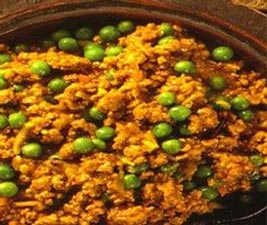
Khoya mattar is a Punjabi cuisine which is high in calorie and delicious in taste.

Khoa or khoya or khawa or mawa is a milk food, made of either dried whole milk or milk thickened by heating milk in an open iron pan.It is similar to , but lower in moisture and made from whole milk instead of whey. There are three types of khoya - batti, chickna, and daan-e-daar. Batti, meaning “rock,” has 50% moisture by weight and is the hardest of the three types; it can be grated like cheese. It can be aged for up to a year, during which it develops a unique aroma and a mouldy outer surface. Chickna (“slippery” or “squishy”) khoya has 80% moisture. For daan-e-daar, the milk is coagulated with an acid during the simmering and has moderate moisture content. Different Khoya is used for different preparation. Khoa is used as the base for a wide variety of Indian sweets. Khoa is normally white or pale yellow. Khoa prepared in the winter may be saved for use in the summer and may acquire a green tinge and grainier texture from a surface mould.Khoa is made by simmering milk in an iron karahi for several hours, over a medium fire. The gradual vaporization of its water content leaves coagulated solids in milk, which is khoa. Khoya is used in various types of sweets such as pedha penda in Gujarati), barfi(or burfi) and halwa.

This cuisine is prepared using daanedar khoya and matter(peas) as main ingredients along with few spices for taste and falvour. It goes well with rotis and can be counted among unique dishes for serving guests.


Ingredients:

1 cup green peas
500 gms milk solids (khoya)500 gm
3 tblsp cashewnuts (broken)
1/2 cup bread croutons
1/2 tsp red chillies crushed
1 tsp red chilli powder
2 tblsp raisins
1/2 tsp turmeric powder
1/2 tblsp oil
2 green chillies chopped
1/2 tblsp ginger garlic paste
1 tsp sesame seeds roasted
saltto taste
1 tsp coriander powder
1/2 cup onion paste
1 tblsp coriander leaves chopped
1/2 cup tomato puree.


Method:
  1. Roast the khoya slightly.
  2. Keep aside.
  3. Boil green peas.
  4. Heat up oil in a pan, mix in onion paste and stir fry till pink.
  5. Mix in ginger-garlic paste and saute.
  6. Mix in tomato puree, turmeric powder, red chilli powder and roast till the oil leaves the masala.
  7. Mix in boiled peas and stir.
  8. Mix in salt, roasted khoya and stir.
  9. Mix in salt, roasted khoya and stir.
  10. Mix in coriander powder and stir to mix well.
  11. Take off the heat.
  12. Sprinkle cut green chillies, roasted sesame seeds, crushed red chillies on the bread croutons and mix well.
  13. To serve assemble the khoya-peas masala in a dish and cover with bread crouton mixture.
  14. Sprinkle with cut coriander.


Preparation Time: 15 minutes
Cooking Time: 15 minutes.
Serves: 4 persons.
Shelflife: 1 day.
Serving suggestions: Serve hot with Rotis or Naan.


Note: Use daan-e-daar khoya for this recipe. Daan-e-daar khoya looks like granules and is best for cooking this recipe. Dont roast the khoya for long or else, it might get sticky . Just roast slightly on medium or low flame for 2 minutes.


Click here to know more about Punjabi Foods and Cuisines - An Introduction To Punjabi Foods And Cuisines.
Blog Widget by LinkWithin
FSIS Post Divider Pictures, Images and Photos